When you are dealing with a standard 5x8 foot bathroom, simply buying a slightly smaller sink will not solve the fact that you keep bumping your elbows on the shower door.
Transforming a genuinely cramped bathroom requires more than just a fresh coat of paint; it requires a strategic approach to the room's physical architecture. You do not necessarily need to tear down load-bearing walls or expand the foundation to make a room feel larger.
By rethinking your structural layout, carving out empty cavities inside your drywall, and understanding how the human eye perceives continuous space, you can effectively double the perceived size of a tight floor plan.
Here is how to streamline your space and turn a frustrating layout into a highly functional retreat.
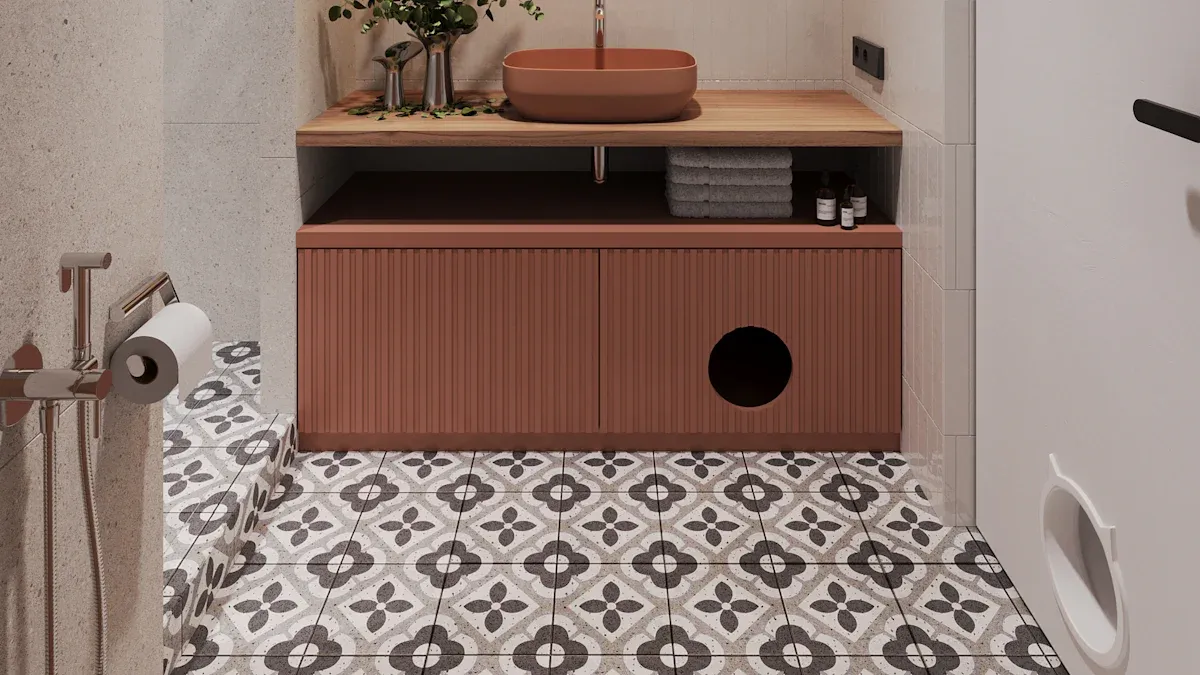
Before looking at tile samples, you must fix the bones of the room. Adjusting the physical layout provides the highest return on investment for small spaces, eliminating dead zones and freeing up room to move.
In most older floor plans, the bathtub is the biggest space-hog in the room, claiming up to 15 square feet of real estate. Unless you have young children or explicitly plan to sell to a family in the near future, keeping a bulky tub that you rarely use is a massive waste of square footage.
Tearing it out and replacing it with a sleek, walk-in shower immediately reclaims that physical space. More importantly, it shifts the visual weight of the room, making the back wall feel much further away.
A standard interior door requires up to nine square feet of clearance just to swing open and closed. In a tight bathroom, that swing path dictates exactly where you can legally place your vanity and toilet, severely limiting your layout options.
Swapping the traditional door for a pocket door that slides directly into the wall cavity completely eliminates this dead zone. If rerouting electrical wires to install a pocket door is not feasible, mounting an exterior sliding barn door in the hallway achieves the exact same space-saving result.
Traditional showers rely on a raised curb to keep water from flooding the bathroom. However, that curb acts as a visual tripwire, breaking the floor plan into separate, choppy boxes.
If your floor joists allow for it, dropping the shower pan to run your main floor tile straight into a curbless shower is a profound upgrade. Eliminating this threshold allows the eye to sweep across an unbroken plane, tricking the brain into perceiving one large, expansive room rather than a segmented one.
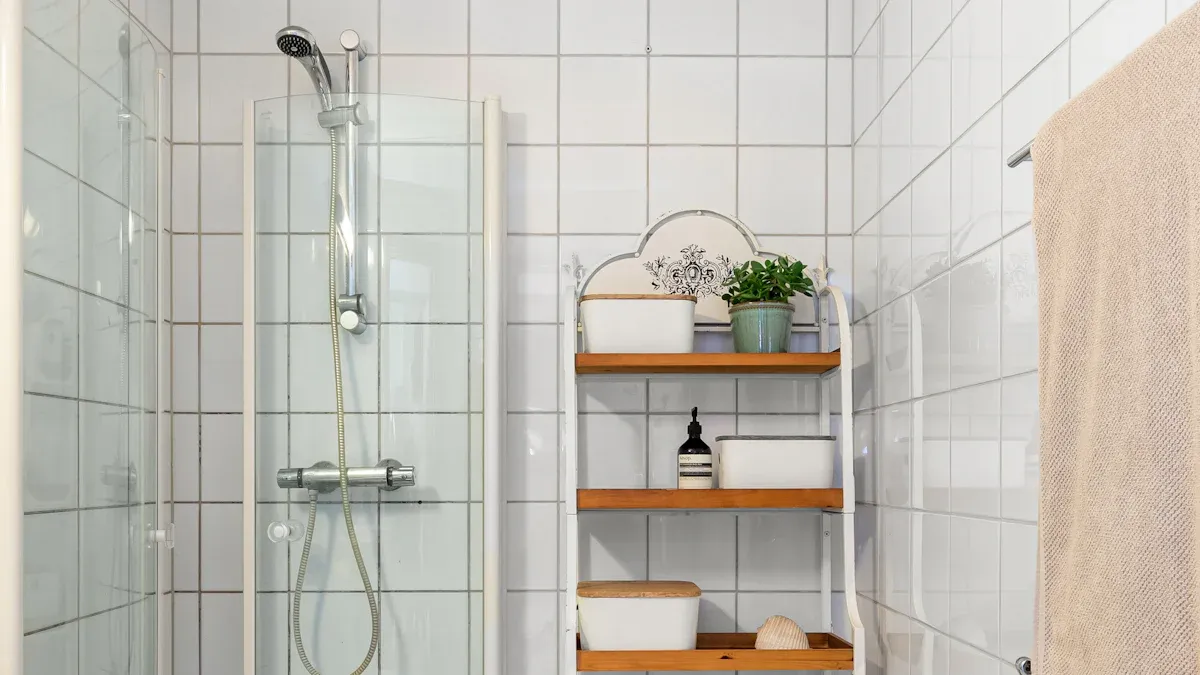
When square footage is limited, the fixtures you bring into the room must work twice as hard. Modern hardware is engineered specifically to solve these spatial challenges by pulling bulk away from the center of the room.
Heavy, floor-standing base cabinets ground a room, but they also eat up visual floor space. Because humans intuitively judge the size of a room by how much continuous floor they can see, a floating vanity is highly effective.
By mounting the cabinet directly to the wall studs and leaving the floor beneath it visible, the entire bathroom immediately feels wider. As an added practical benefit, it makes mopping underneath the sink effortless.
Related article: Floating Vanity vs Freestanding Bathroom Vanity: Which One Is Right for You?
A standard vanity base measures 21 inches deep. In a narrow, galley-style layout, that depth can turn your main walking path into a tightrope. Sourcing an 18-inch or even 15-inch narrow-depth vanity pulls the cabinetry back against the wall.
This widens your clearance significantly, allowing two people to navigate the space more comfortably, while still providing a functional sink basin and underneath storage.
Every inch of countertop matters. Traditional deck-mounted faucets require a vanity deep enough to house the plumbing directly behind the sink bowl. By paying a plumber to move the water supply lines up into the wall, you can use a wall-mounted faucet.
This allows for a much shallower vanity and reclaims precious counter space. The same principle applies to wall-mounted toilets; by hiding the bulky water tank inside the wall cavity, you save up to six inches of forward projection, freeing up crucial legroom.
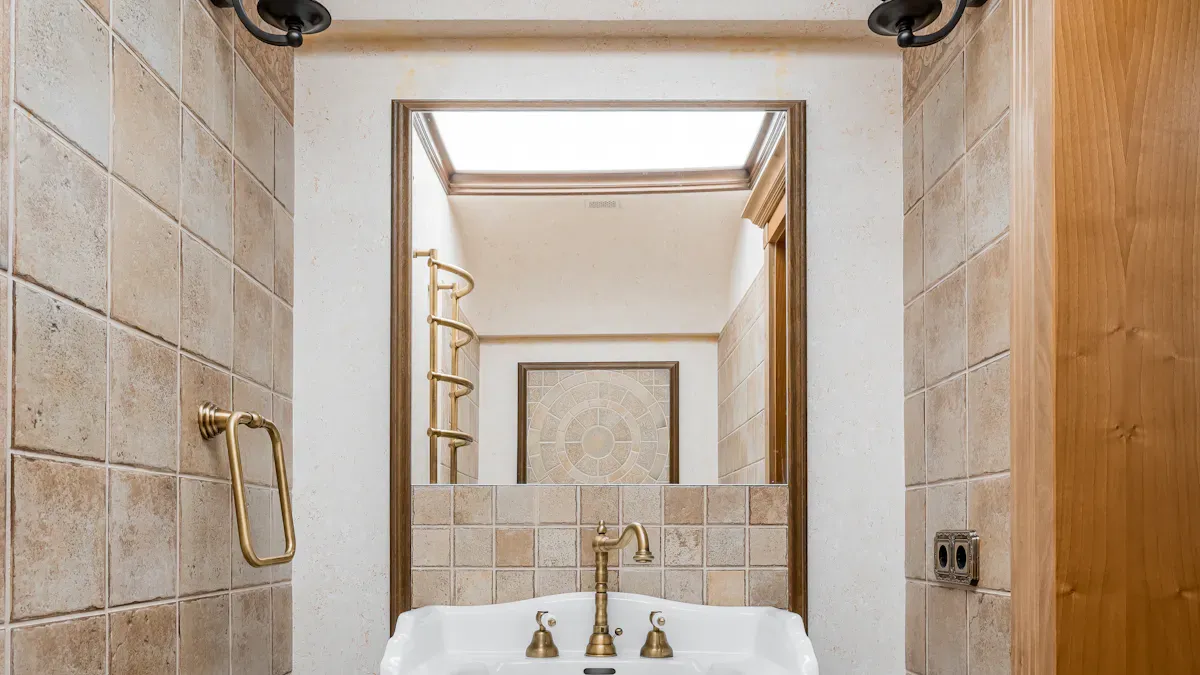
When you are already short on floor space, the last thing you want to do is buy a bulky freestanding cabinet. The secret to small bathroom storage isn't adding more furniture to the room—it is making the existing architecture do the heavy lifting.
If your shower is currently cluttered with wire racks and bottles balanced on the tub ledge, it is time to look behind your drywall. Standard residential walls have a hollow 14.5-inch gap between the wooden studs.
A skilled contractor can open up this dead space and frame out deep, recessed niches. Suddenly, you have dedicated, waterproof shelving for all your shower products that doesn't protrude a single inch into your standing area.
You can apply this exact same logic above the vanity by tucking a flush-mounted medicine cabinet right into the wall.
If your home lacks a dedicated hallway linen closet, finding a place for clean towels is a constant headache. Instead of trying to squeeze a wider vanity into the room, look up.
Installing a tall, narrow linen tower that sits directly on the counter (or right next to it) utilizes the dead airspace near your ceiling. It provides massive, concealed storage for towels, hampers, and bulky hot tools, all while maintaining a highly efficient footprint.
Related article: The Complete Guide to Bathroom Vanity with Tall Cabinets
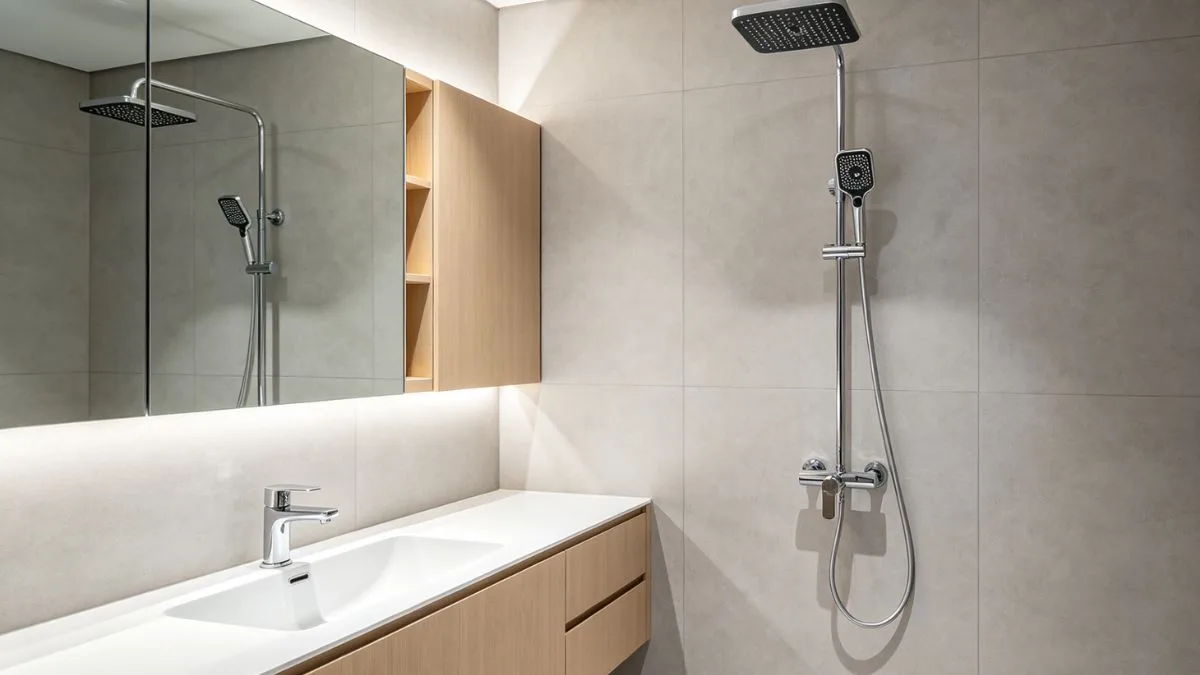
Once you have physically maximized the layout and storage, you can use cosmetic finishes to manipulate how the room feels. The right materials can trick the eye into thinking the walls are further apart than they actually are.
A traditional shower curtain is essentially a soft, opaque wall that chops a small bathroom exactly in half. When you walk into the room, your eye stops at the fabric. Upgrading to a clear, frameless glass shower enclosure removes that visual barrier entirely.
It allows natural light from the window to penetrate the shower and lets your eye travel uninterrupted all the way to the back wall. It is one of the fastest ways to make a tight bathroom feel twice as deep.
There is a persistent remodeling myth that small rooms require small tiles. In reality, tiny mosaic tiles on the floor create a grid of hundreds of intersecting grout lines. This results in a busy, cluttered visual landscape that subconsciously makes the room feel cramped.
Opting for large-format tiles—like 12x24 or 24x24 inches—drastically reduces the number of grout lines. The result is a smooth, seamless surface that feels expansive and is significantly easier to keep clean.
Lighting is often an afterthought in small bathrooms, usually limited to a single fixture above the mirror. Relying on one light source casts harsh shadows, darkening the corners and making the ceiling feel lower.
To open up the space, you need to layer your lighting. Combine a bright overhead fixture with wall sconces placed at eye level, or opt for a backlit LED mirror. Washing the walls evenly with warm light eliminates shadows and pushes the visual boundaries of the room outward.
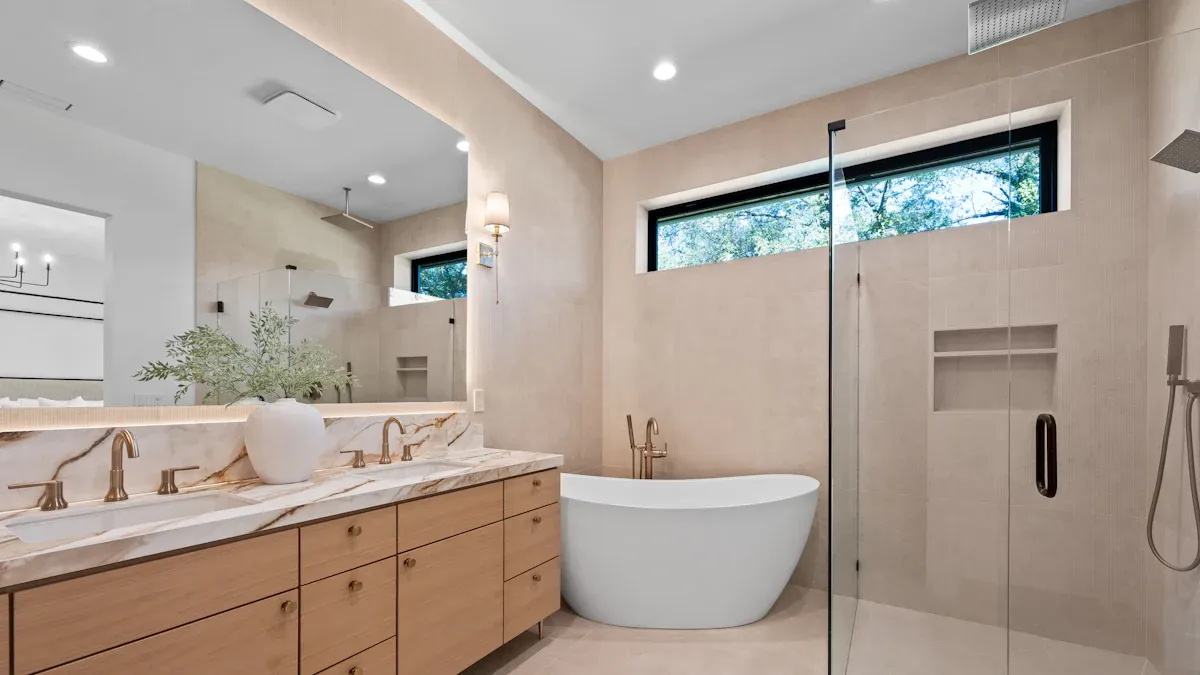
Light colors inherently reflect light, making them a powerful tool for tight floor plans. Using a palette of crisp whites, soft grays, and pale, sandy tones on your walls acts as an amplifier for whatever natural light the room receives.
Reflective surfaces, like polished chrome hardware, glossy subway tiles, or a large mirror, will further bounce that light around the space, keeping the atmosphere airy and open.
Related article: The Geography of Bathroom Vanity Colors Trends and Buying Guides
A neutral room does not have to be boring. If you want to use a dark, moody color like navy blue, charcoal, or emerald green, apply it strategically to a single accent wall—preferably the wall furthest from the door.
Dark colors naturally recede from the eye. Painting the back wall a deep shade creates an optical illusion of depth, drawing the eye backward and making the room feel much longer than it actually is.
Ultimately, a successful small bathroom remodel is about outsmarting your floor plan rather than fighting it. You do not need a massive footprint to create a highly functional, luxurious space.
By prioritizing structural efficiency—like stealing space from the walls, floating your fixtures, and removing visual barriers—you can transform even the tightest 5x8 bathroom into an airy, comfortable retreat.
When planning your project, start by evaluating your daily pain points. Tackle the layout and structural upgrades first, and let the cosmetic finishes be the final touch that ties your new, expanded space together.
Does a tub-to-shower conversion hurt my home value?
Generally, no. Most modern homebuyers prefer a large, luxurious walk-in shower over a cramped builder-grade bathtub. The only exception is if it is the only bathtub in the entire house. Homes marketed to families with small children usually need at least one tub for bathing infants and toddlers.
What is the best vanity size for a small bathroom?
For tight spaces, a 24-inch to 30-inch wide vanity is the standard recommendation. If depth is the primary issue, look for a "narrow depth" vanity that projects only 15 to 18 inches from the wall, rather than the standard 21 inches, to widen your walking path.
How can I add storage to a bathroom with no closet?
Maximize your vertical and internal wall space. Install a flush-mounted recessed medicine cabinet over the sink, use floating shelves high above the toilet tank, and choose a vanity with deep, U-shaped pull-out drawers rather than standard cabinet doors to maximize under-sink organization.

Copyright 2022 - All Mirplusbath