Planning a bathroom remodel? One of the most common questions that comes up right before the tile goes on the wall is exactly where the shower head should go.
If you place it too low, tall guests will be doing the awkward "shower squat." Place it too high, and your water pressure might feel like a gentle mist by the time it reaches you.
To take the guesswork out of your renovation, the plumbing industry actually has a universal sweet spot.
This blog will show you the ideal standard shower head height and help you to choose and measure the perfect height for your space.
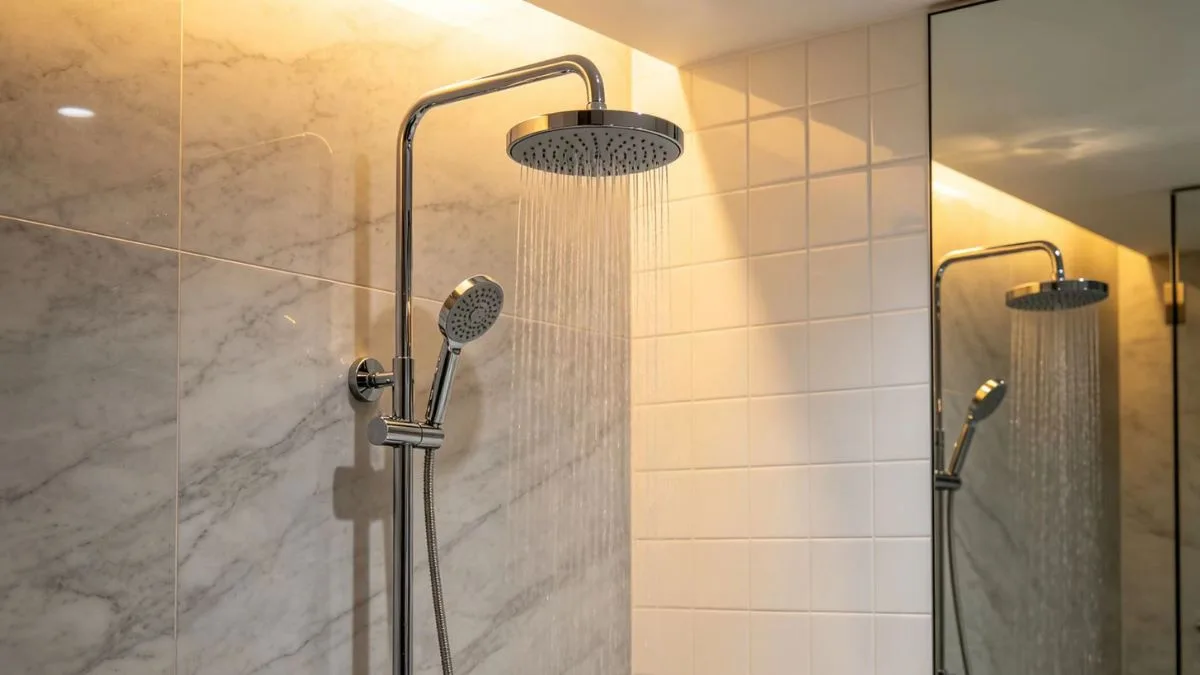
The universally accepted standard shower head height is 80 inches (6 feet 8 inches) measured from the finished floor. This measurement balances comfort, water efficiency, and splash control for the average adult.
You might be wondering who actually sat down and decided that 80 inches (6 feet 8 inches) was the magic number for plumbing codes across the country. It isn't just a random guess; it comes down to a mix of human ergonomics and water physics.
Here is why plumbers and designers stick to this golden rule:
The 80-inch rule is a great starting point, but the ideal height actually changes depending on the specific hardware you choose. Here is a breakdown of the three most popular household shower styles:
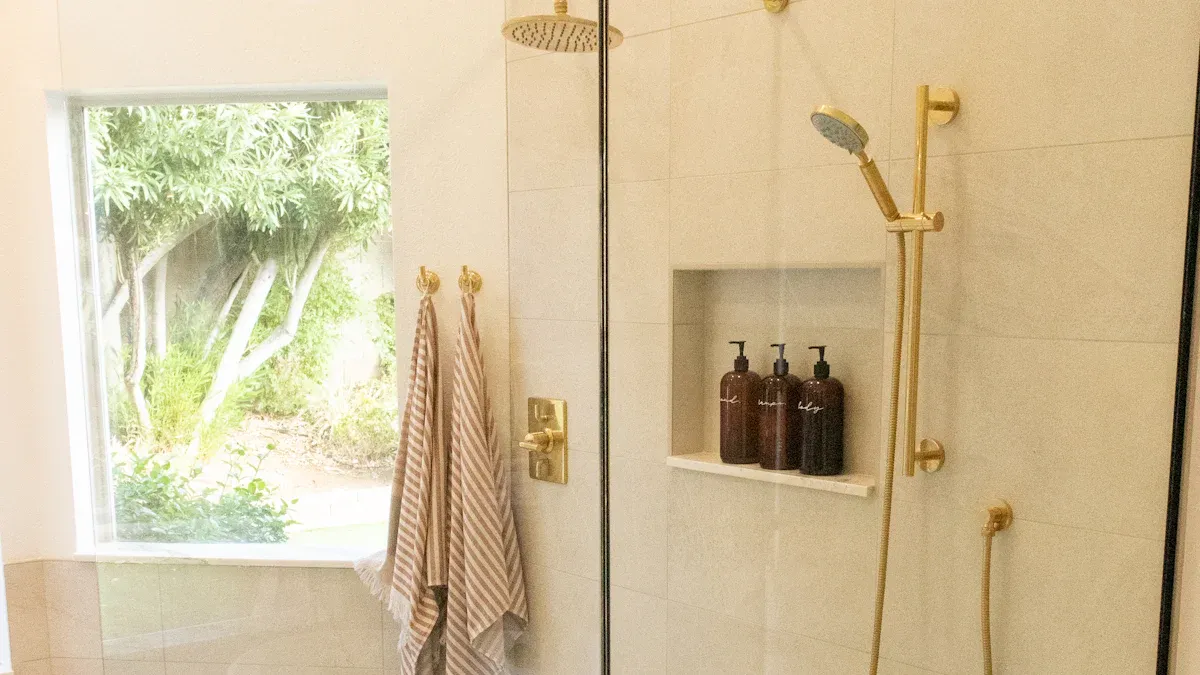
The Key Point: Install at 80 inches from the finished floor.
This is the classic, angled shower head found in most homes. Because it sits on a short arm extending from the wall, the water sprays outward in a cone shape.
Installing it at 80 inches ensures the water trajectory hits the average adult squarely on the shoulders and chest rather than spraying directly into their face. This specific placement keeps you perfectly warm and provides strong, targeted water pressure exactly where you need it for a quick, efficient morning routine.
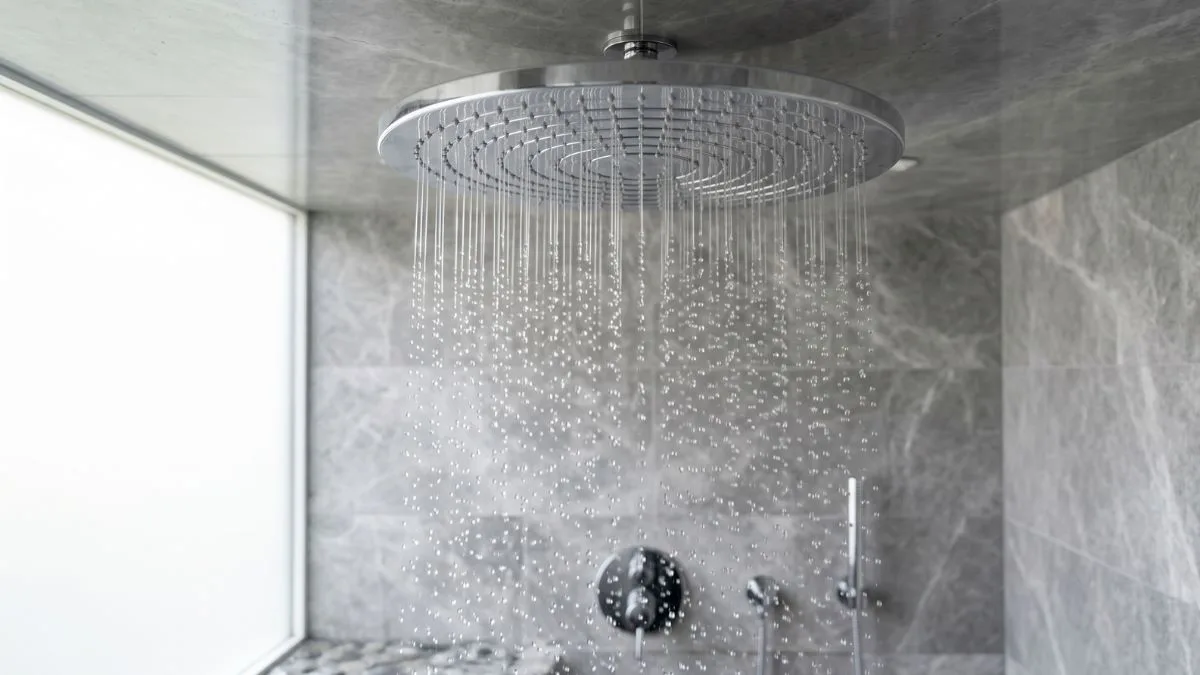
The Key Point: Install at 84 inches or mount directly to the ceiling.
If you want to recreate a luxurious, spa-like experience at home, rain showerheads cannot be mounted at the standard 80-inch mark. They are designed to drop water straight down, mimicking real rainfall.
If mounted too low, the water droplets do not have enough distance to separate, and you lose that relaxing sensory effect. Giving it that extra height transforms a basic daily wash into a calming, full-body immersion that is perfect for washing away the stress of a long day.
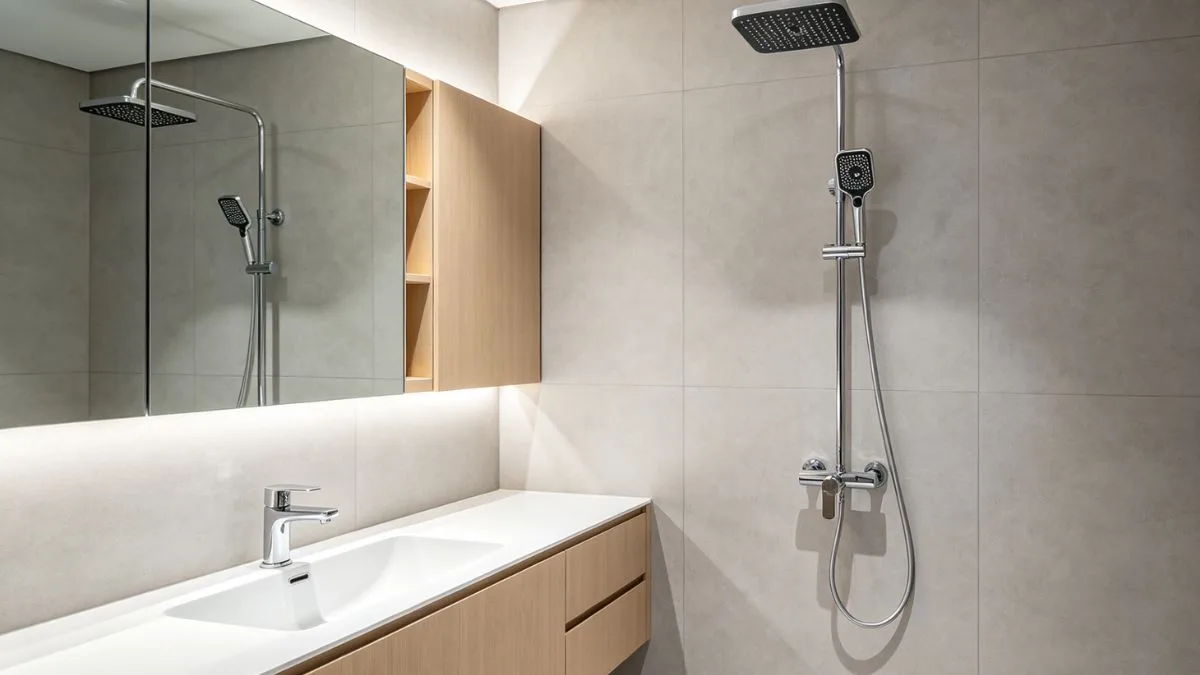
The Key Point: The slide bar should cover a wide vertical range, typically centered around 72 to 78 inches.
This is the ultimate flexible choice for modern homes. A slide bar allows you to move the shower head up and down instantly. It is perfect for days when you don't want to wash your hair, for families with young children, or even for easily rinsing down the shower walls on cleaning day.
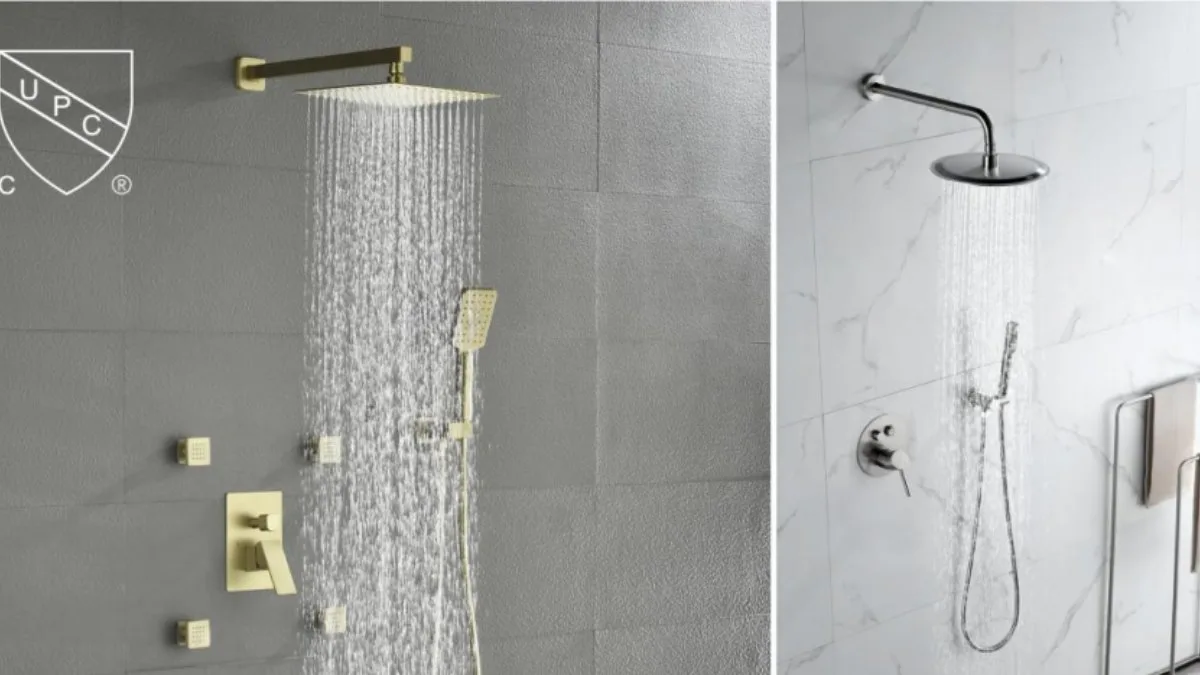
The Ideal Height: The main fixed head sits at 80 to 84 inches, while the diverter and handheld bracket sit lower, around 72 inches.
Can’t decide between a relaxing rain shower and a practical handheld wand? Dual systems feature a primary overhead shower for daily use, seamlessly connected to a secondary handheld unit off to the side.
This setup gives you the absolute best of both worlds: the luxurious, hands-free downpour of a fixed head, plus the targeted cleaning convenience of a wand for rinsing off or easily washing down the shower walls.
A standard measurement is great on paper, but bathrooms need to work for the actual people using them. Here is how to adjust for specific family needs.
If your household includes someone well over six feet tall, an 80-inch shower head might still feel a bit cramped. The good news? You do not need to tear into your wall and move the plumbing pipes to fix this.
You can easily swap out a standard shower arm for an "S-shaped" or gooseneck extension arm. This simple hardware swap immediately raises the shower head's final height by several inches, giving tall users plenty of breathing room.
For bathrooms shared by adults and small children, a fixed shower head can be frustrating. Water spraying from 80 inches up can feel overwhelming to a toddler.
In these spaces, a handheld showerhead mounted on an adjustable vertical slide bar is the absolute best solution, allowing every family member to customize their own shower experience in seconds.
If you are designing an accessible bathroom for seniors or wheelchair users, standard heights do not apply. To meet strict ADA (Americans with Disabilities Act) guidelines, the shower cannot just have a low, fixed head.
It must feature a handheld shower spray unit with a hose. This unit must be mounted on a vertical slide bar that allows the user to lock the shower head at any height between 38 and 48 inches above the floor, ensuring it is always safely within arm's reach.
Before you finalize your measurements and drill into your expensive shower tile, keep these two crucial engineering details in mind.
The pipe protruding from your wall (the shower arm) dictates your final height. A standard straight arm will keep the shower head right around that 80-inch mark.
However, if you buy a large, sweeping gooseneck arm or an adjustable extension arm, your final height will change dramatically. Always measure the height with the hardware attached before finalizing your design.
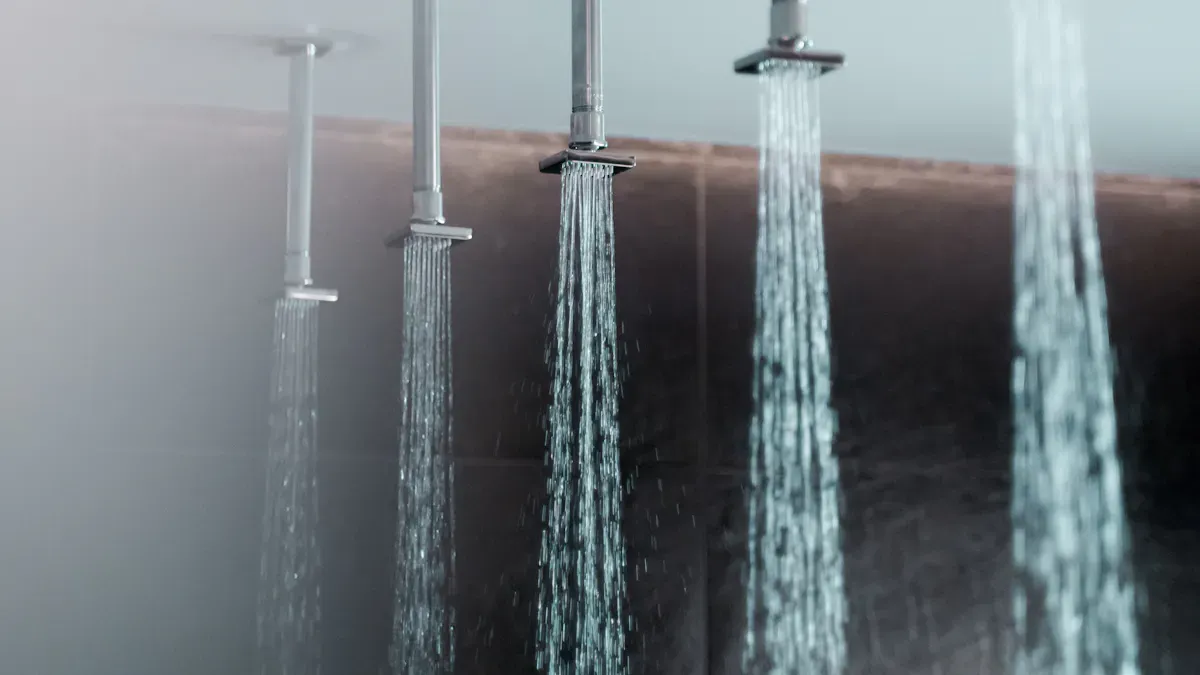
Gravity and distance are the enemies of water pressure. The higher you mount your shower head, the wider the water spray spreads out before it hits you.
If your home already suffers from slightly low water pressure, installing a massive rain showerhead at 90 inches high might result in a disappointing, misty drizzle. Always test your water flow before committing to an extra-tall shower installation.
Related article: How to Install a New Bathroom Vanity and Sink
1. What is the standard shower head height in 2026?
The widely accepted industry standard is 80 inches (6 feet 8 inches) measured from the finished bathroom floor. This accommodates the average adult comfortably.
2. Can I install a shower head higher than 80 inches?
Yes, absolutely. Rain showerheads are frequently installed at 84 inches or directly onto the ceiling to provide a luxurious overhead cascade. Just ensure your home has adequate water pressure to support the extra height.
3. How do I choose the right shower head height for children?
Instead of installing a fixed shower head lower on the wall, the best approach is to install a handheld shower unit on a vertical slide bar. This allows the height to be easily lowered for children and raised back up for adults.
4. Does raising the shower head affect water pressure?
It can. As the water travels further through the air, the spray pattern widens and loses velocity. If you are raising your shower head significantly above the 80-inch standard, make sure you choose a showerhead designed to optimize water pressure.
At the end of the day, setting your shower head at the standard 80 inches is a fantastic rule of thumb that will keep the vast majority of people comfortable. It balances ergonomics, water temperature retention, and splash control perfectly for the average adult.
However, remember that your bathroom should ultimately be designed for the people who actually use it every day. Whether that means adding a gooseneck extension arm for a taller family member, upgrading to a dual system for that luxurious rain effect, or installing a practical slide bar for the kids, a little bit of customized planning goes a long way.
Take a moment to measure twice, think about your family's daily routine, and check your water pressure before you drill into that beautiful new tile. By keeping these simple guidelines in mind, you can create a shower space that is both highly functional and incredibly relaxing.

Copyright 2026 - All Mirplusbath