Walk into any newly renovated bathroom, and the vanity is often the centerpiece. But beneath the beautiful quartz countertop and modern hardware lies a critical decision that most homeowners and even some contractors get wrong: the cabinet material.
Unlike kitchens, where grease and heavy usage are the main concerns, bathrooms are essentially daily steam rooms. When you take a hot shower, the humidity spikes, the mirrors fog up, and moisture settles on every surface. Over time, this environment acts as a relentless stress test on your cabinetry.
In the cabinetry market, the two heavyweights for premium finishes are Solid Wood and Wood Veneer. As a bathroom vanity manufacturer, we often see clients struggle to choose between them.
To make an informed decision, we need to look past the marketing brochures and understand how the physical properties of these materials react to heat and water.

The Reality of Solid Wood
Solid wood vanities are exactly what they sound like—constructed entirely from lumber like oak, walnut, or maple. There are no layers or hidden cores; the piece of wood you touch on the outside is the same material throughout. It is heavy, robust, and carries the prestige of traditional woodworking.
The "Veneer" Misconception
Wood veneer often gets a bad reputation because consumers confuse it with cheap laminate or low-end furniture that peels after a few months. Real wood veneer is a thin slice of authentic, natural hardwood that is permanently bonded to an engineered core.
The secret to a high-quality veneer vanity isn't just the surface—it’s what lies beneath. If the core is MDF (Medium-Density Fiberboard) or particleboard, it will absorb water and swell like a sponge.
However, premium bathroom vanities use high-grade, water-resistant Plywood as the core. This distinction changes everything.
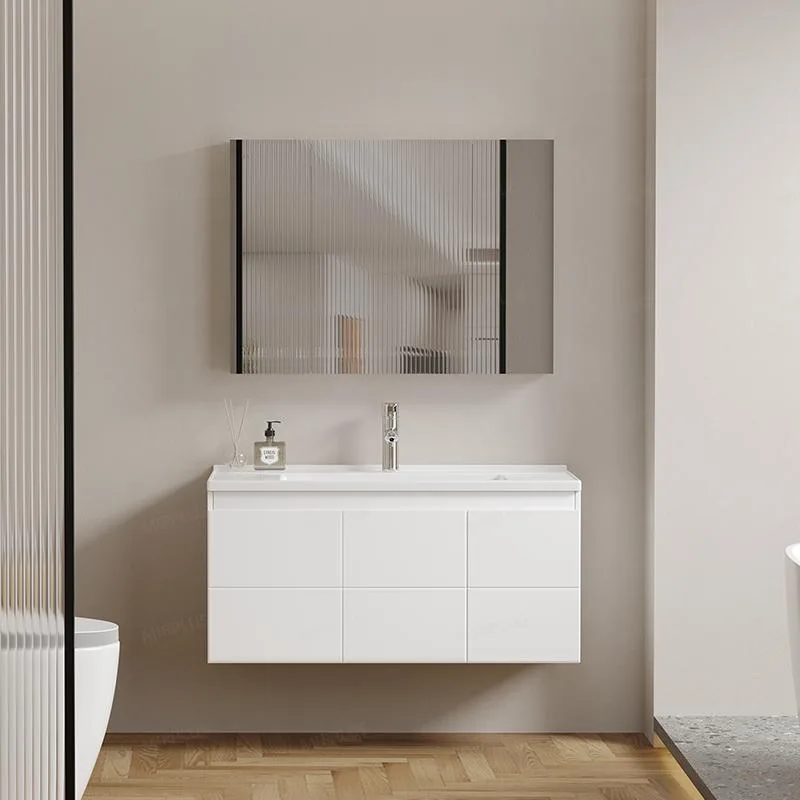

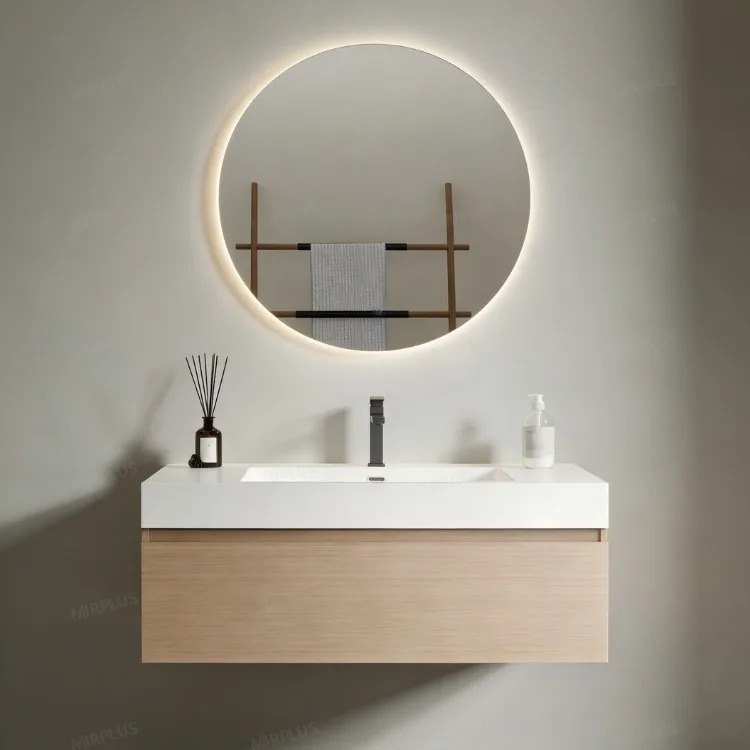
How do these two materials actually compare when exposed to daily steam and splashes? Let’s break down their physical performance across three critical metrics.
Wood is a hygroscopic material, meaning it naturally absorbs and releases moisture depending on its environment.
In a highly humid bathroom, solid wood naturally expands and contracts. Over time, this constant "breathing" can cause paint to crack at the joints or doors to warp if the bathroom lacks proper ventilation.
This is where high-end wood veneer truly shines. Because a high-grade plywood core is made of multiple thin layers of wood glued together with their grains running in alternating directions, it effectively neutralizes the natural tension of the wood.
A veneer cabinet with a plywood core will not warp or crack when the bathroom gets steamy, offering significantly higher structural stability in wet environments.
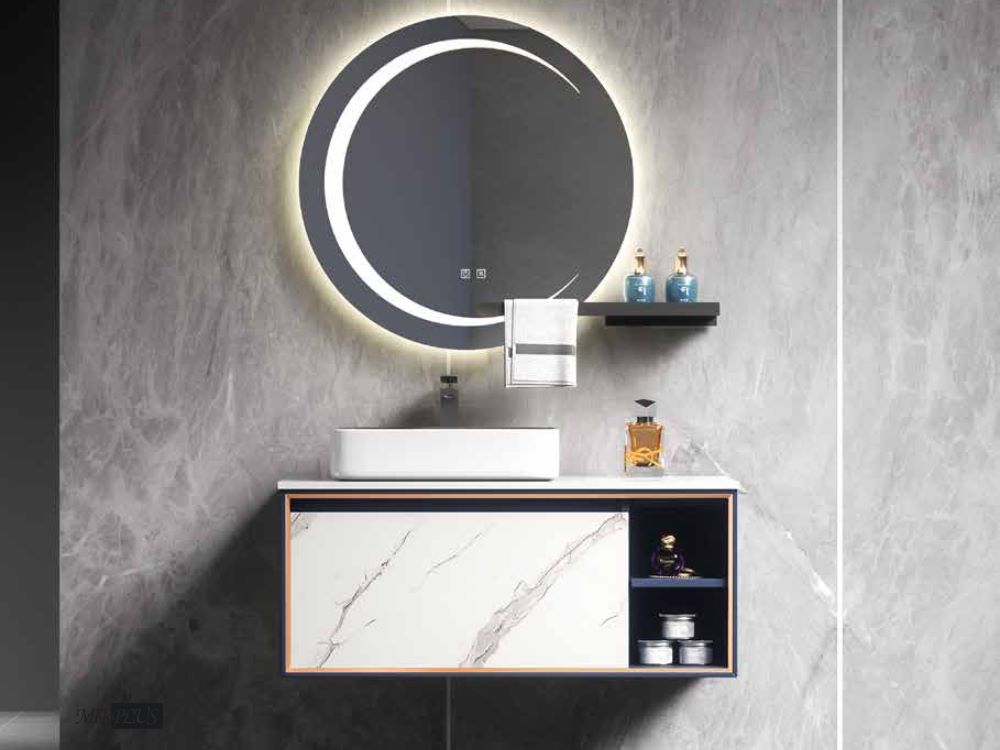
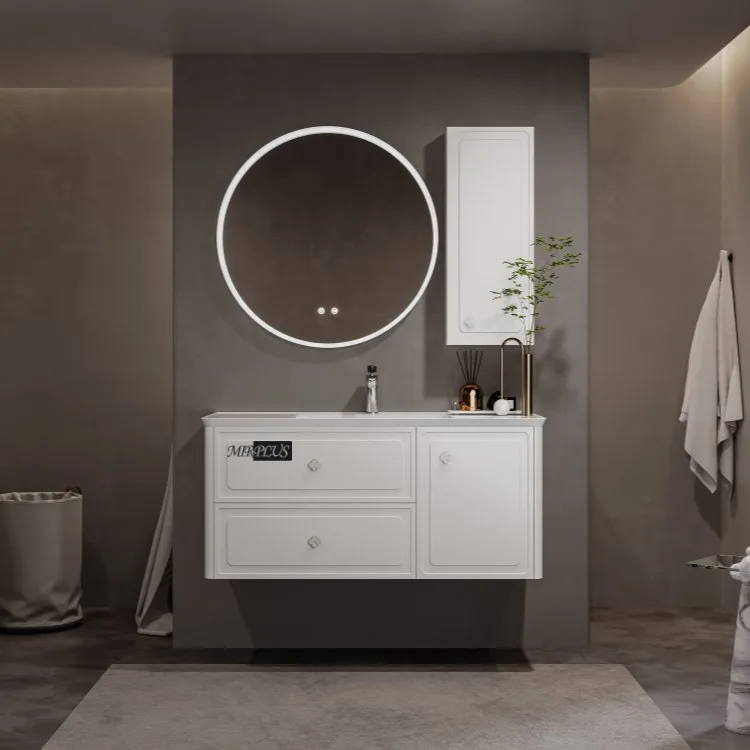
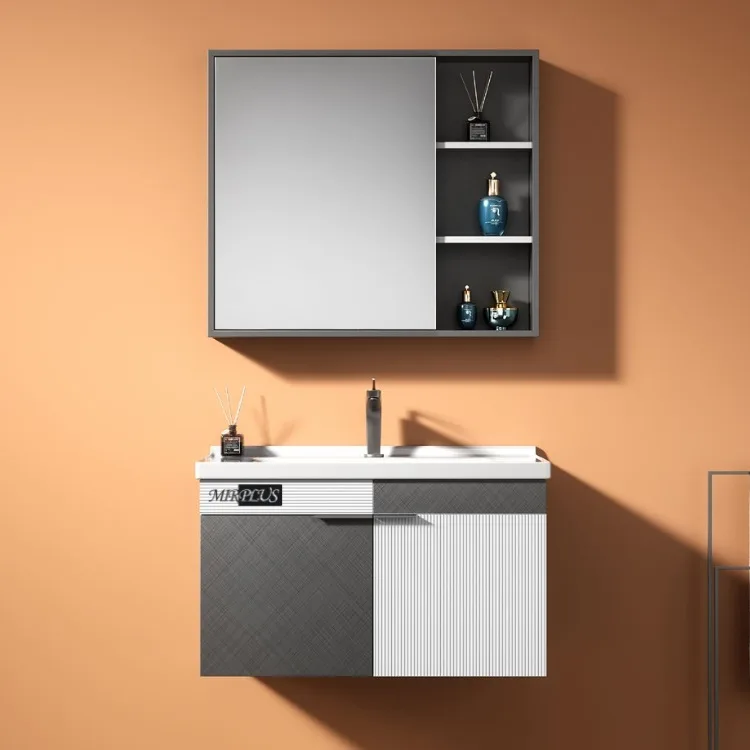
When it comes to physical impact, solid wood takes the lead. It is a robust material throughout, and if a solid wood vanity gets deeply scratched or dented over the years, it can be sanded down and refinished, restoring it to its original state.
Veneer, while highly durable for daily use, features a thin surface layer. If a sharp impact chips the veneer deeply, or if poor manufacturing allows water to seep underneath and cause bubbling, it is extremely difficult to repair.
Once the veneer layer is compromised, you cannot simply sand it down like solid wood.
Solid wood requires large volumes of premium, flawless hardwood and longer, labor-intensive processing times (such as extensive kiln-drying and complex milling). This naturally places it at a high premium.
Wood veneer maximizes the yield of expensive, premium logs by slicing them thinly and applying them to reliable engineered cores.
This manufacturing process delivers the exact aesthetic and organic texture of real wood at a fraction of the cost, making it highly budget-friendly for both single-home renovations and large commercial projects.
To give you a clear overview of how they stack up after considering these factors, here is a quick reference guide:
Related article: Specifying Bathroom Cabinets: A Complete Guide to PVC, MDF, and Plywood
| Feature | Solid Wood Vanities | Wood Veneer Vanities (Plywood Core) |
| Moisture Resistance | Moderate. Prone to expanding and contracting with humidity changes. | High. Cross-layered plywood core resists warping and movement. |
| Aesthetics | 100% natural, deep texture. Allows for intricate traditional carvings. | Authentic wood grain surface. Best for sleek, flat-panel modern designs. |
| Durability & Repair | Excellent. Deep scratches can be sanded down and refinished. | Good. However, if the veneer peels or chips deeply, it cannot be sanded. |
| Structural Stability | Lower. Wood naturally "breathes," risking joint cracks over time. | Excellent. Engineered core neutralizes the natural tension of the wood. |
| Price Point | High. Expensive raw materials and labor-intensive manufacturing. | Moderate. Cost-effective use of premium wood with superior core stability. |
The Solid Wood Dilemma: Natural Movement
Wood is a hygroscopic material, meaning it naturally absorbs and releases moisture depending on the environment. In a humid bathroom, solid wood doors will expand; in the dry winter months, they will shrink.
This constant "breathing" can cause the paint to crack at the joints or the doors to warp slightly over time. If you are installing a solid wood vanity, an excellent bathroom exhaust fan and good ventilation are non-negotiable.
The Veneer Advantage: Engineered Stability
This is where high-end wood veneer truly shines. Because the plywood core is made of multiple thin layers of wood glued together with their grains running in alternating directions, it effectively neutralizes the natural tension of the wood.
A veneer vanity with a plywood core will not warp or crack when the bathroom gets steamy. It offers the exact visual warmth of solid wood but is structurally engineered to survive a harsh indoor climate.
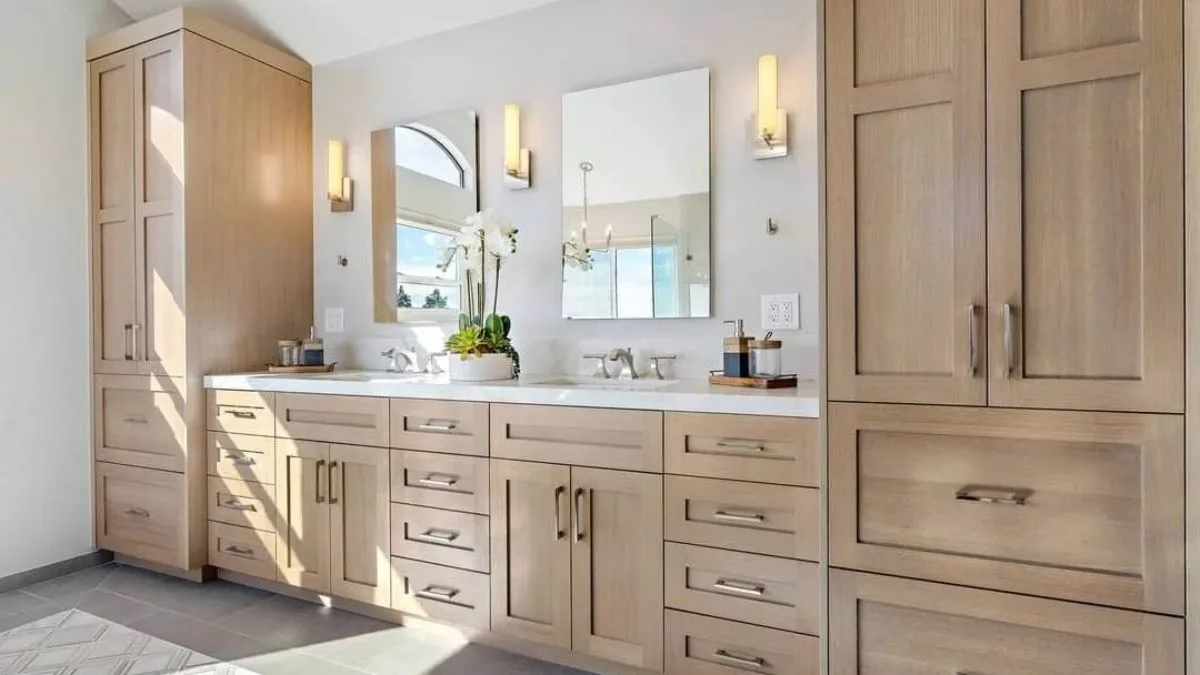
Which one is right for your project? It comes down to your design goals and the specific bathroom environment.
You should lean toward Solid Wood if you are designing a luxury master bathroom with excellent ventilation and a generous budget.
It is the only choice if you want traditional, highly detailed door profiles (like raised panels or heavy carvings). Solid wood is an investment piece that, with proper care, can last a lifetime and be refinished down the road.
On the other hand, Wood Veneer is the superior choice for modern, minimalist designs, such as flat-panel floating vanities.
It is highly recommended for guest bathrooms, kids' bathrooms, or rental properties where humidity levels fluctuate wildly and budget control is necessary. You get the organic beauty of real wood without the structural anxiety.
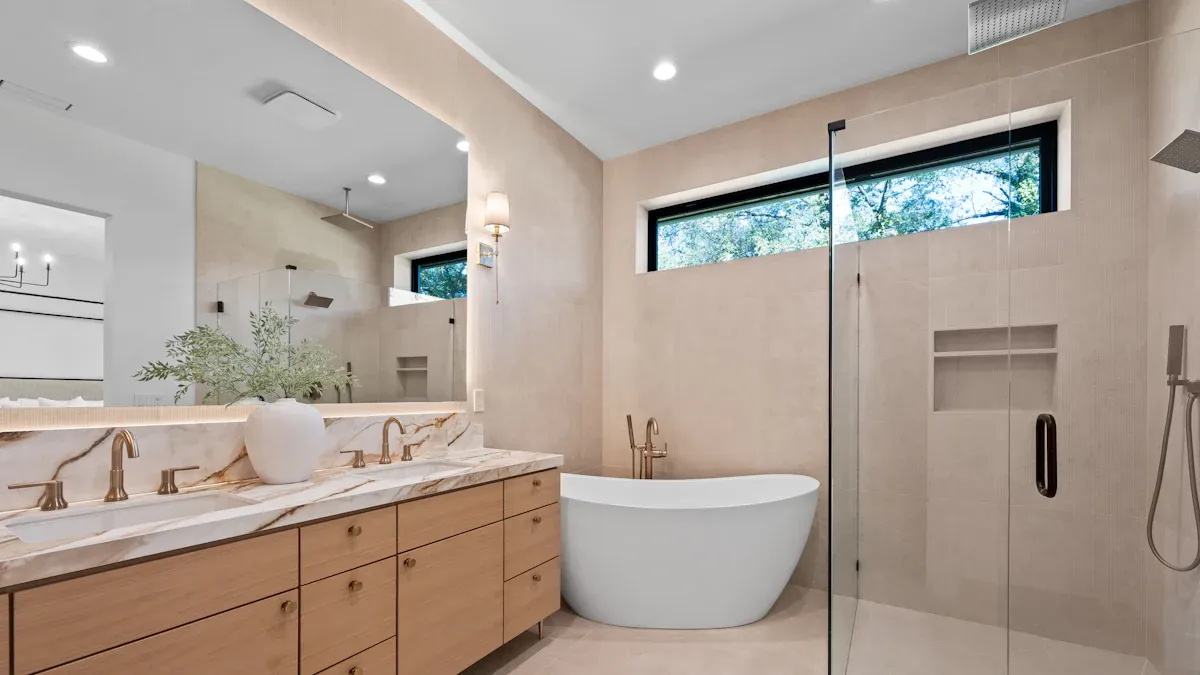
Knowing how materials behave is one thing; building them to last is another. The lifespan of any bathroom vanity ultimately depends on the factory's manufacturing standards.
For our solid wood lines, we strictly monitor the lumber's moisture content (MC) before it ever touches a saw. By kiln-drying the wood to precise levels and applying multiple layers of waterproof sealants—especially on the vulnerable end-grains—we drastically reduce the risk of future cracking.
For our veneer vanities, we completely reject MDF for bathroom use, relying solely on high-grade plywood. More importantly, we utilize advanced edge-banding technology with PUR (Polyurethane) adhesive.
Unlike standard glues, PUR is entirely waterproof. It seals the edges of the cabinet doors so tightly that steam and moisture simply cannot penetrate beneath the veneer, eliminating the peeling issues associated with lower-end products.

We also understand that not every bathroom can fit a massive double vanity. By leveraging the lightweight and warp-resistant properties of premium veneer and plywood, we have developed a line of folding bathroom cabinets.
These wall-mounted units provide the authentic look of wood and essential storage, but can be folded away to maximize space in tight, highly humid environments—proving that you don't have to sacrifice durability for spatial efficiency.
At the end of the day, both solid wood and wood veneer are excellent choices—provided they are manufactured with the bathroom's harsh environment in mind. Focus on the core materials, ask about the finishing and gluing processes, and match the material to your room's ventilation and design style.
Will a wood veneer bathroom vanity peel over time?
It depends entirely on the manufacturing quality. Cheap vanities using MDF cores and standard EVA glues are highly prone to peeling when exposed to steam. However, premium veneer vanities built with water-resistant plywood cores and sealed with waterproof PUR (Polyurethane) edge-banding adhesive will not peel under normal bathroom conditions.
Is solid wood completely waterproof?
No natural wood is 100% waterproof. While high-quality solid wood vanities are coated with multiple layers of waterproof sealants, they still require care. Standing water should never be left on the surface, and adequate bathroom ventilation is required to protect the finish and prevent the wood from expanding.
Why do you use wood veneer for your folding bathroom cabinets instead of solid wood?
Folding mechanisms require precise alignment and lightweight materials. Solid wood is heavy and naturally expands or contracts with humidity, which can quickly misalign hinges and tracks. Wood veneer with a plywood core provides the necessary structural stability and lighter weight, ensuring the folding mechanism operates smoothly for years without warping.
How should I clean and maintain my wood bathroom cabinet?
Whether you have solid wood or veneer, the cleaning protocol is the same. Avoid harsh chemical cleaners, bleach, or abrasive sponges. Wipe down the surface with a soft, damp microfiber cloth and mild soap. Most importantly, always dry the cabinet immediately after cleaning or heavy splashing.

Copyright 2026 - All Mirplusbath