When designing a new bathroom or upgrading an old vanity, the painted vs. stained cabinets dilemma is one of the most critical decisions you will make.
While both finishes offer distinct aesthetic advantages, a bathroom is not like a kitchen or a living room. It is a high-moisture environment subject to daily steam, water splashes, and temperature fluctuations.
Your choice between paint and stain will dictate not just how the bathroom looks, but how well the vanity holds up to daily wear and tear.
Here is a definitive breakdown of how painted and stained bathroom cabinets perform regarding moisture resistance, maintenance, and design versatility.
Before looking at color swatches, it is crucial to understand how bathroom conditions affect cabinetry.
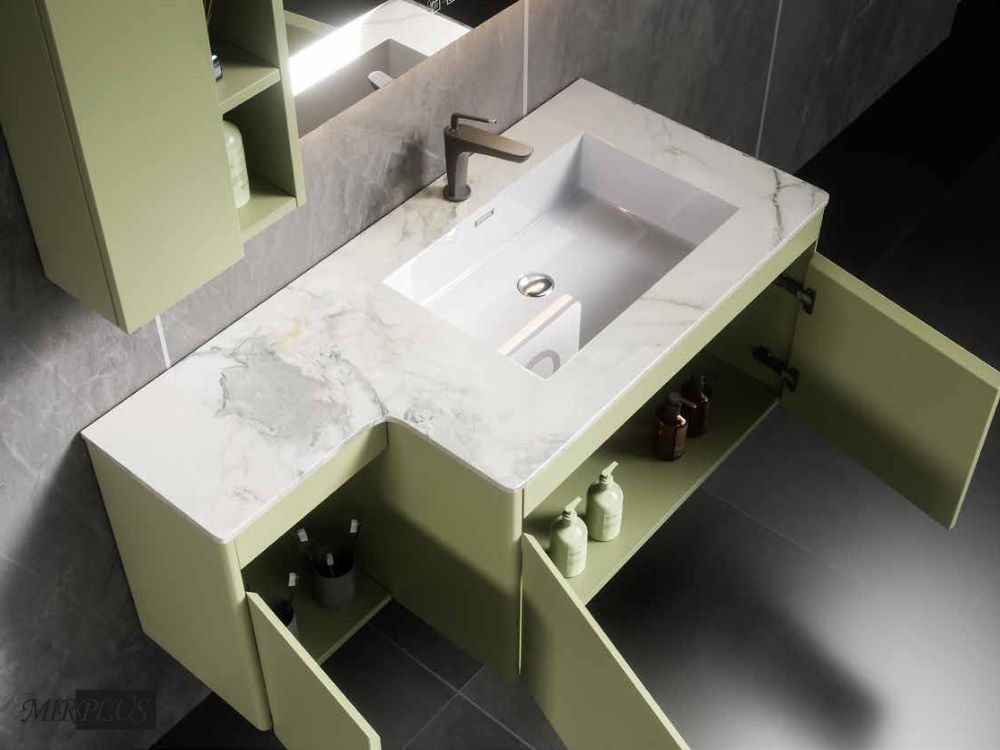
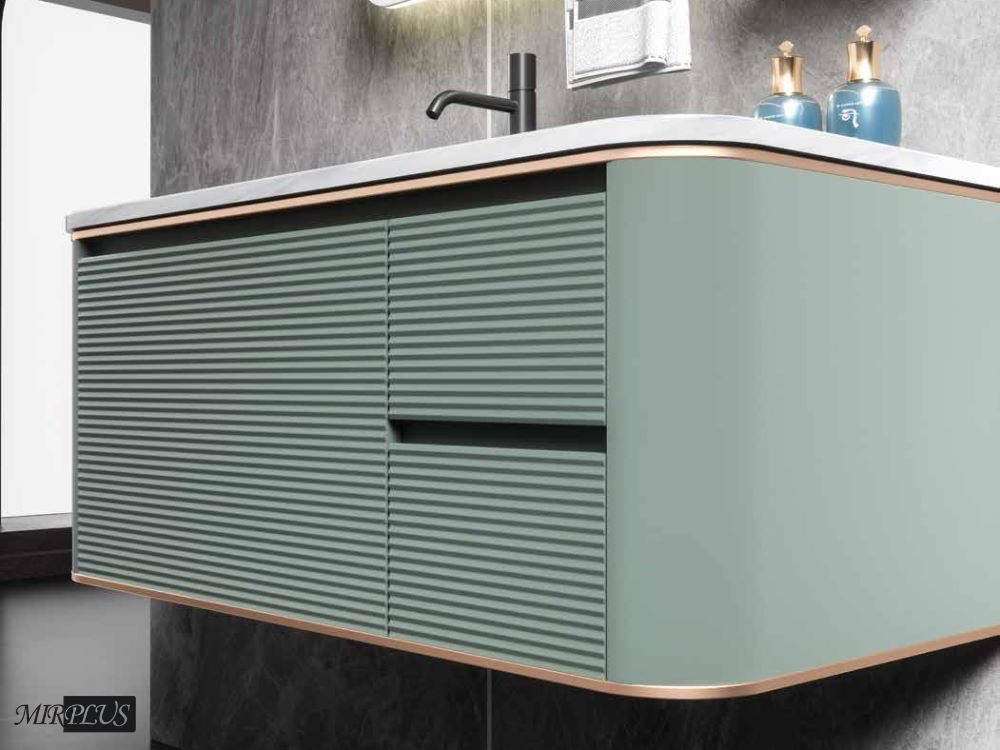
Painted cabinets involve coating the vanity surface with a solid, opaque color. This process completely masks the wood grain, resulting in a smooth, uniform appearance.
High-quality painted bathroom cabinets often use a combination of materials to withstand humidity. While the cabinet box may be constructed of moisture-resistant plywood, the painted doors and drawer fronts are typically made from MDF (Medium-Density Fiberboard) or a tight-grained wood like maple.
MDF is highly preferred for painted doors in bathrooms because it is dimensionally stable. It does not expand or contract with steam the way solid wood does, which prevents the smooth painted finish from developing hairline cracks at the door joints over time.
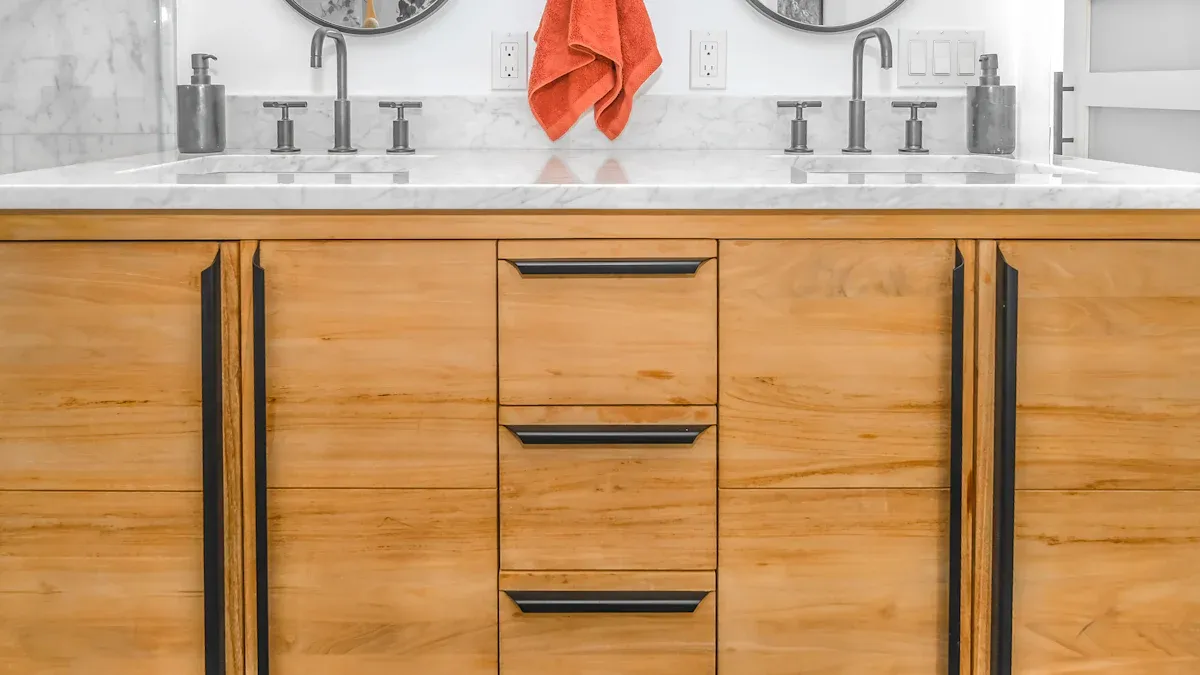
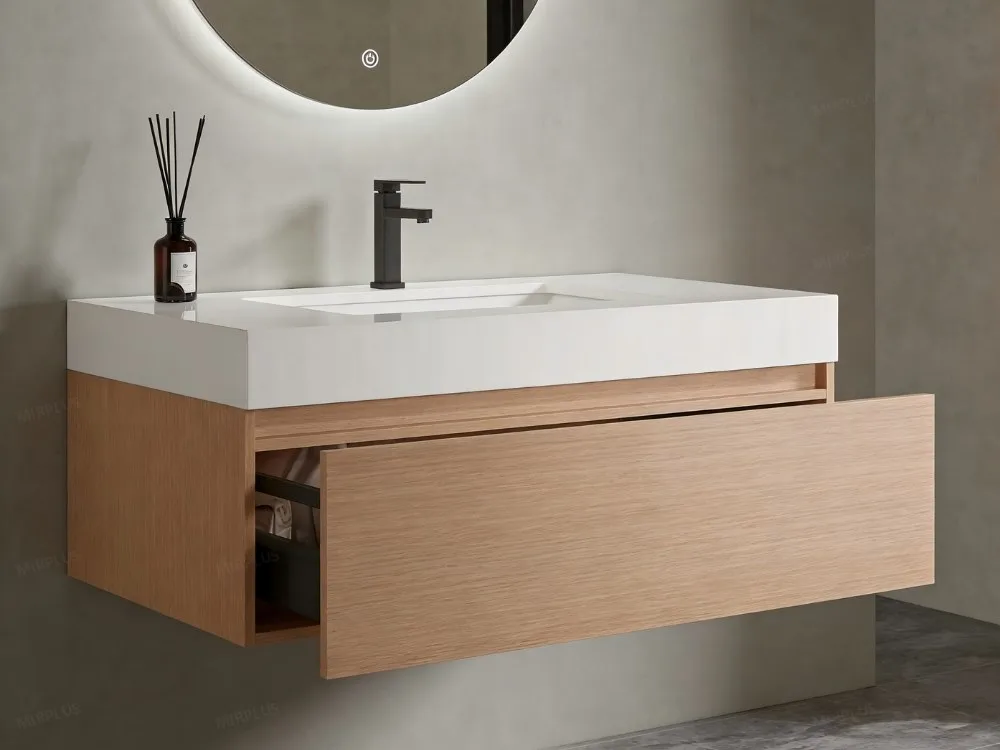
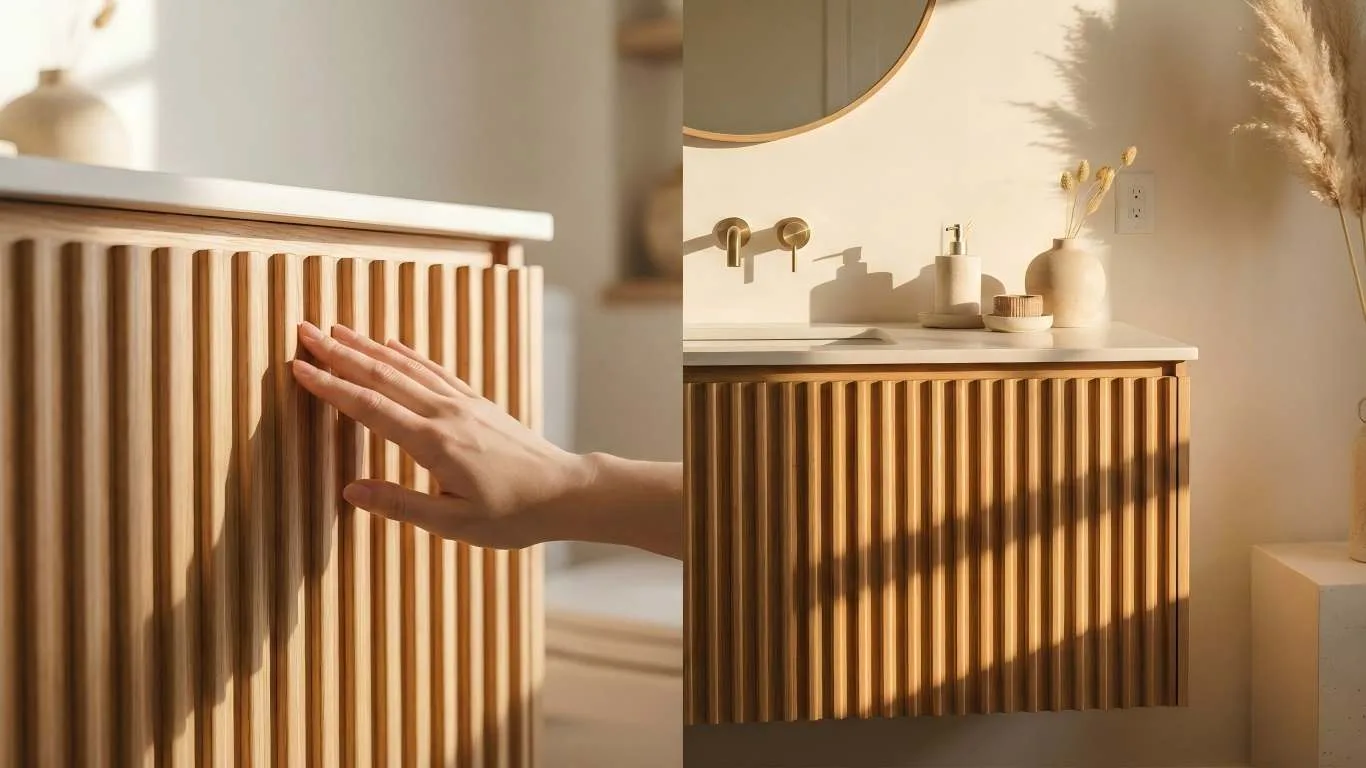
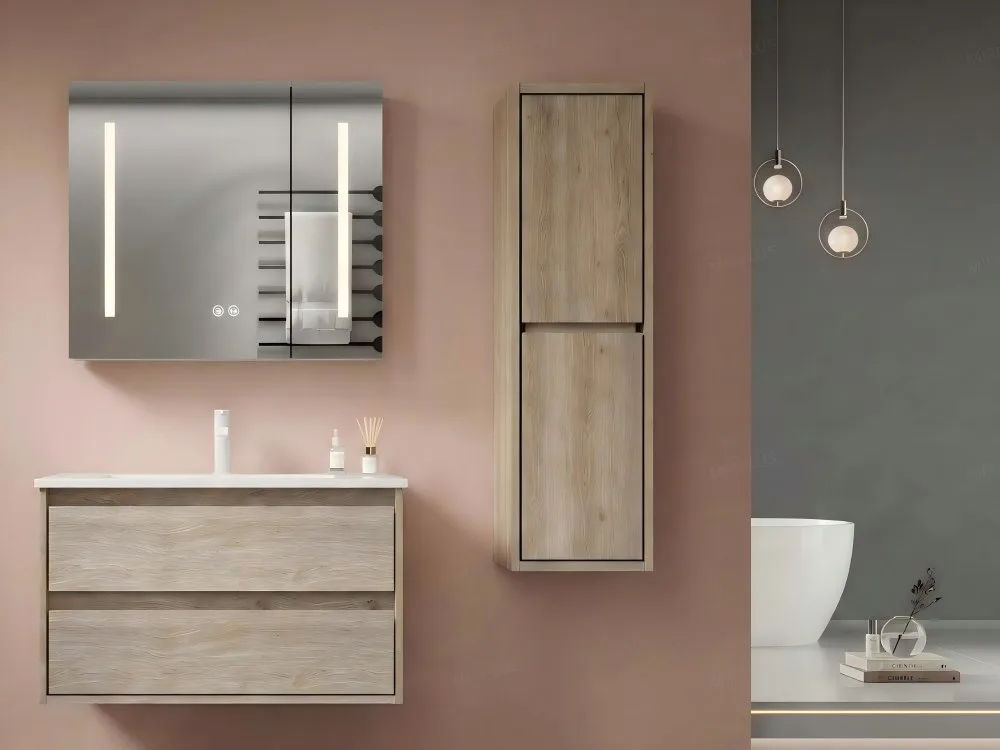
Stained cabinets are designed to enhance the natural beauty of solid wood or wood veneers. The stain penetrates the material, highlighting the organic grain patterns, knots, and variations.
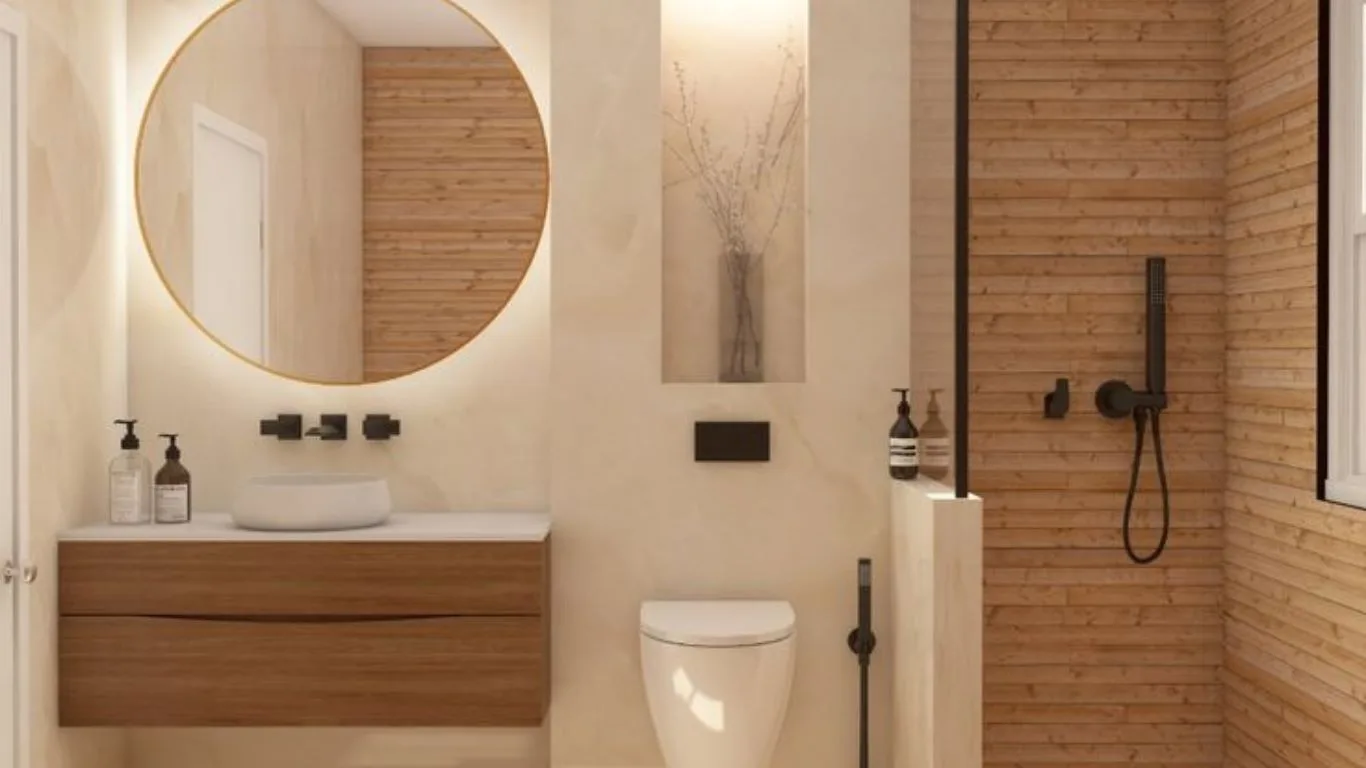
As we all know, bathrooms naturally feature a lot of cold, hard surfaces—porcelain sinks, ceramic tiles, and glass shower doors. A stained wood vanity introduces much-needed organic warmth and texture to the space, keeping it from feeling too sterile.
Related article: Which Bathroom Cabinet Finishes Work Best for You
When weighing painted vs. stained cabinets, cost is a significant factor.
Generally, painted cabinets are more expensive upfront. Achieving a flawless, durable painted finish requires intense labor: sanding, priming, multiple coats of paint, and clear topcoats. If you request a custom color match for your bathroom, the price increases further.
Stained cabinets are often more cost-effective in terms of labor, as the finishing process is faster and requires fewer coats. However, this savings can be offset if you choose a luxury hardwood. A stained premium walnut vanity will likely cost more than a painted MDF vanity.
Related article: What Is the Cost of Bathroom Cabinets and What Affects the Price?
Related article: The Geography of Bathroom Vanity Colors Trends and Buying Guides
The painted vs. stained cabinets decision comes down to how you use your bathroom. If you want a pristine, modern aesthetic and don't mind wiping away the occasional makeup smudge, a painted vanity offers unparalleled style.
If you have a busy household, kids sharing a bathroom, or prefer a warm, natural aesthetic that easily hides water spots, stained wood is the superior, low-maintenance choice.
Are painted or stained cabinets better for a bathroom with poor ventilation?
If your bathroom lacks a strong exhaust fan and stays humid, painted MDF cabinets are generally safer. MDF will not warp or expand with moisture, preventing the paint from cracking. Solid stained wood requires excellent ventilation to prevent warping over time.
Do painted bathroom cabinets chip easily?
Painted cabinets are more susceptible to chipping from physical impacts, such as being hit with a hairdryer or a heavy lotion bottle. Stain penetrates the wood and does not chip, making it more durable against physical strikes.
Can I paint over my existing stained bathroom vanity?
Yes, but the preparation must be meticulous. Bathroom vanities accumulate oils, soaps, and moisture. You must thoroughly degrease, sand, and apply a high-adhesion bonding primer before painting, or the new paint will quickly peel in the humid environment.

Copyright 2026 - All Mirplusbath