When designing a modern bathroom or kitchen, the vanity is almost always the focal point of the space. However, beneath the immediate visual appeal lies a critical decision regarding the core materials. Today, the debate over the best material frequently comes down to Ceramic vs. Sintered Stone Washbasins.
Choosing the right material dictates not only how the basin looks on day one, but how it will perform over the next decade—whether in a busy family home or a high-traffic commercial hotel.
Both materials are excellent, but they serve entirely different commercial needs. Let’s break down the science, the performance, and the 2026 design trends so you can specify the exact right material for your next major build.
To understand how these two materials will perform in a wet environment, we first have to look at how they are created.
Ceramic is the time-tested standard of the sanitary ware industry. It is created through a process called slip-casting, where a mixture of natural clay, powders, and water is poured into a specific mold.
Once the basin takes shape, it is coated in a liquid glaze and fired in a kiln. This intense firing process melts the glaze into a hard, brilliantly glossy, and waterproof glass-like surface. Because it relies on fixed molds, ceramic is ideal for producing identical, classic shapes with smooth, sweeping curves.
Related article: How to Choose the Right Bathroom Sink Shape

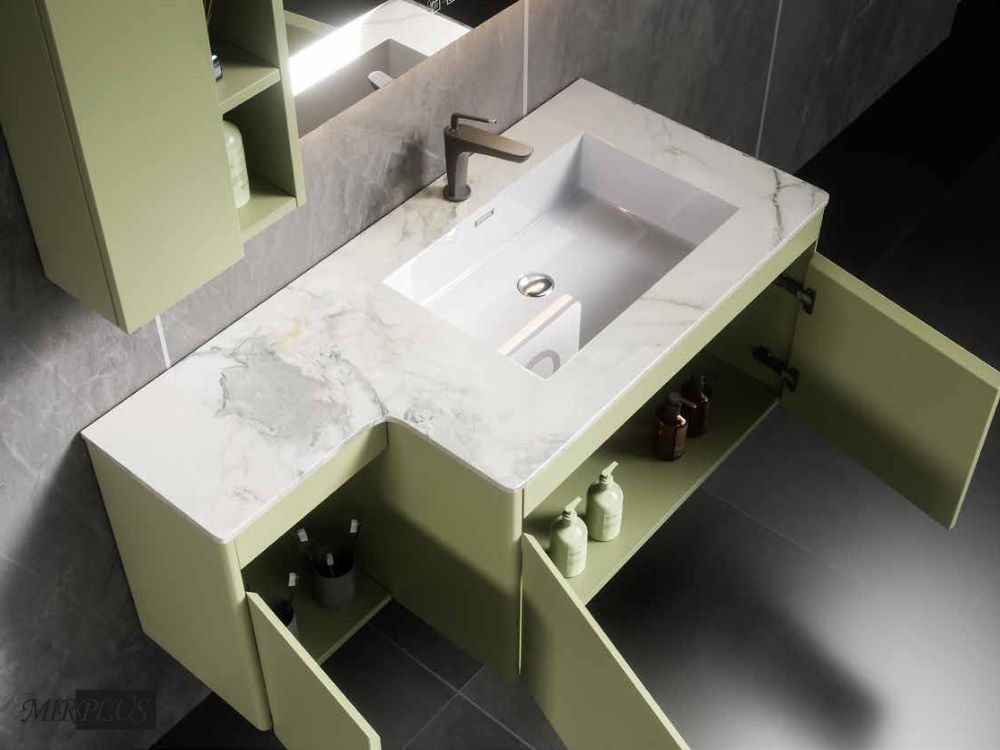
Sintered stone is a marvel of modern engineering, designed to mimic the way the earth forms natural stone—but accelerated from millions of years to hours. It is made from a precise blend of natural minerals (such as quartz, porcelain, and glass) that are compacted under thousands of tons of extreme pressure.
The slab is then baked in an ultra-high-temperature kiln at over 1200°C. This "sintering" process fuses the particles entirely without artificial resins or binders, resulting in an incredibly dense, solid architectural slab.
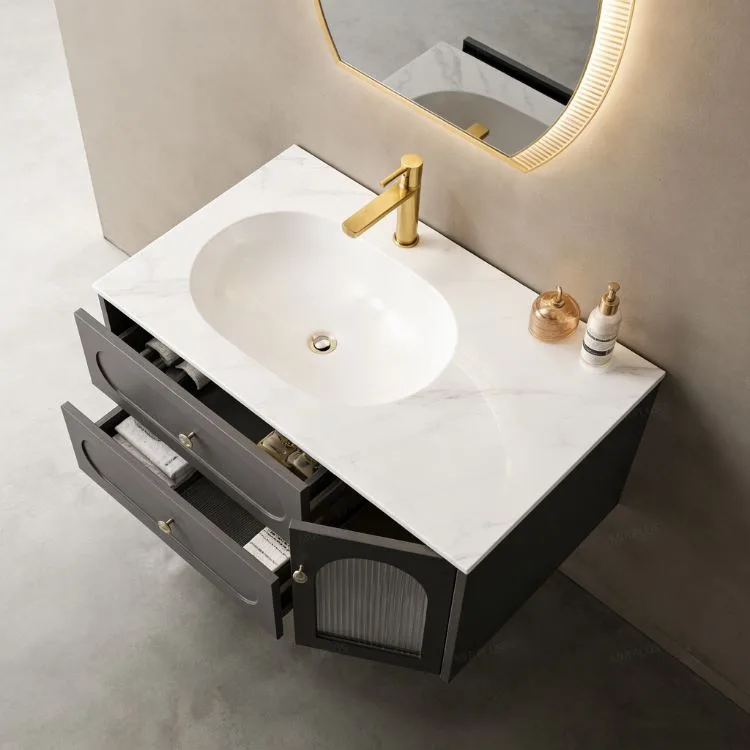
When comparing Ceramic vs. Sintered Stone Washbasins, the physical data translates directly into how these materials handle the daily chaos of a busy home or commercial space. Here is exactly how they stack up in real-world scenarios.
The surface hardness of a washbasin dictates its lifespan. Ceramic features a highly durable, baked-on glaze that handles daily washing beautifully. However, because the glass-like glaze sits on top of a softer clay body, a heavy, sharp impact can cause damage. In a practical bathroom setting, accidentally dropping a thick glass perfume bottle—or in a kitchen, a heavy cast-iron pan—can chip the ceramic surface.
Sintered stone scores exceptionally high on the Mohs hardness scale. It is incredibly dense and nearly impossible to scratch under normal conditions. In the kitchen, you can practically use it as a cutting board for a chef's knife; in the bathroom, it easily withstands metal grooming tools and heavy daily use without leaving a mark.
In any wet environment, moisture and stain resistance are paramount. The glazed top surface of a ceramic basin is 100% waterproof. However, the unglazed bottom and edges can absorb liquids over time if not perfectly sealed. In practical terms, if dark hair dye or liquid foundation spills near an unsealed ceramic edge, it can leave a permanent stain.
Conversely, sintered stone features near-zero porosity (less than 0.05% water absorption) throughout the entire slab. It is completely impervious to liquids. This means you can spill red wine or coffee on a sintered stone kitchen island, or waterproof mascara on a bathroom vanity, and it will wipe away effortlessly without ever staining.
Both materials perform exceptionally well against daily temperature fluctuations. Ceramic is highly resistant to standard hot water and daily bathroom cleaners. However, decades of scrubbing with harsh abrasive chemicals can eventually dull its beautiful glossy finish.
Because sintered stone was born in a 1200°C kiln, it is immune to thermal shock. A hot curling iron left directly on the bathroom vanity, or a boiling pot placed straight from the stove onto a kitchen counter, will not scorch or melt the sintered stone.
Furthermore, it is completely unaffected by harsh bleach or industrial cleaners, maintaining its exact original finish indefinitely.
Physical weight plays a major role in how a room is built. Ceramic basins are generally lighter and designed to easily "drop in" or mount directly beneath standard wooden vanity cabinets. This makes replacing a bathroom sink a straightforward, practical job for most contractors.
Because sintered stone is a dense, solid architectural slab, it is significantly heavier. Installing a sintered stone basin—especially in a modern "floating vanity" design—requires robust cabinet construction or heavy-duty steel mounting brackets behind the drywall to properly support the stone's weight.
Related article: How to Install a New Bathroom Vanity and Sink
Beyond the physical data, the visual impact of your vanity sets the tone for the entire bathroom experience.
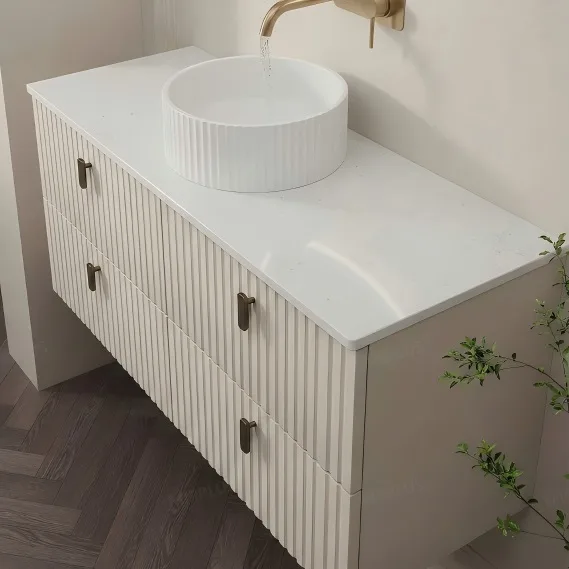
Ceramic is famous for its brilliant, high-gloss, pristine white finish. Because it is poured into molds, ceramic easily achieves smooth, sweeping curves, soft, rounded corners, and deep bowl shapes. Ceramics also offer a wide variety of design options, encompassing diverse colors, shapes, sizes, and surface treatments. It represents classic, timeless cleanliness that appeals to almost every demographic.

If ceramic is classic, sintered stone is cutting-edge. It can be manufactured in a matte, honed, or polished finish, and the printing technology allows it to perfectly mimic the organic veining of natural Calacatta marble, the warmth of wood grain, or the edgy look of industrial concrete.
More importantly, it allows for "integrated sink" designs, where the countertop slopes seamlessly down into the basin, creating a sharp, monolithic, and highly modern aesthetic.


Now that we understand the physical specifications and aesthetic possibilities, how do you apply this to an actual renovation or new build? The right choice ultimately comes down to the scale and design goals of your specific project.
For projects requiring standardized sizing
Whether updating a residential family bathroom or outfitting a multi-unit apartment building, ceramic remains the highly practical, undisputed champion.
Because ceramic relies on fixed, uniform molds, it offers excellent cost-efficiency and straightforward installation. It allows designers and contractors to deliver beautiful, classic bathrooms with consistent, proven reliability.
For unique dimensions or a highly specific layout
Standard sizes rarely fit. Because creating a custom ceramic mold is usually cost-prohibitive for a unique layout, sintered stone becomes the ideal solution.
Since it is manufactured in massive slabs, sintered stone can be precisely cut, mitered, and bonded to fit absolutely any bespoke dimension. Whether you need an extra-long 72-inch floating vanity or a uniquely angled corner sink, it provides total architectural freedom.
The Modern Design Trend: The Seamless Shift
As we move through 2026, there is a noticeable shift in high-end design, moving away from traditional under-mount sinks toward seamless sintered stone vanities. This shift comes down to a desire for cleaner lines and easier long-term maintenance.
Traditional under-mount sinks require a bead of silicone caulk to seal the joint between the sink and the counter, which can yellow, peel, or collect dirt over time. Sintered stone allows for a 100% seamless, "integrated" construction with zero visible joints—creating the ultra-modern, pristine look that defines today's luxury spaces.
Related article: Best Bathroom Sink Types & Materials | Transform Your Bathroom Sanctuary
Selecting the perfect material is only half the battle; getting it to your job site in one piece is the other. Importing heavy, fragile items like washbasins and vanity sets via ocean freight carries an inherent risk of breakage.
If you are sourcing directly from a factory in China to save on project costs, you must audit their commercial packaging standards. Do not accept standard retail boxes for bulk shipments. Ensure your manufacturing partner utilizes high-density PE foam edge protectors, thick honeycomb cardboard inner cartons, and fumigation-free plywood crates for LCL (Less than Container Load) shipments.
Proper container loading and drop-tested packaging are the only ways to guarantee a 0% breakage rate upon arrival.
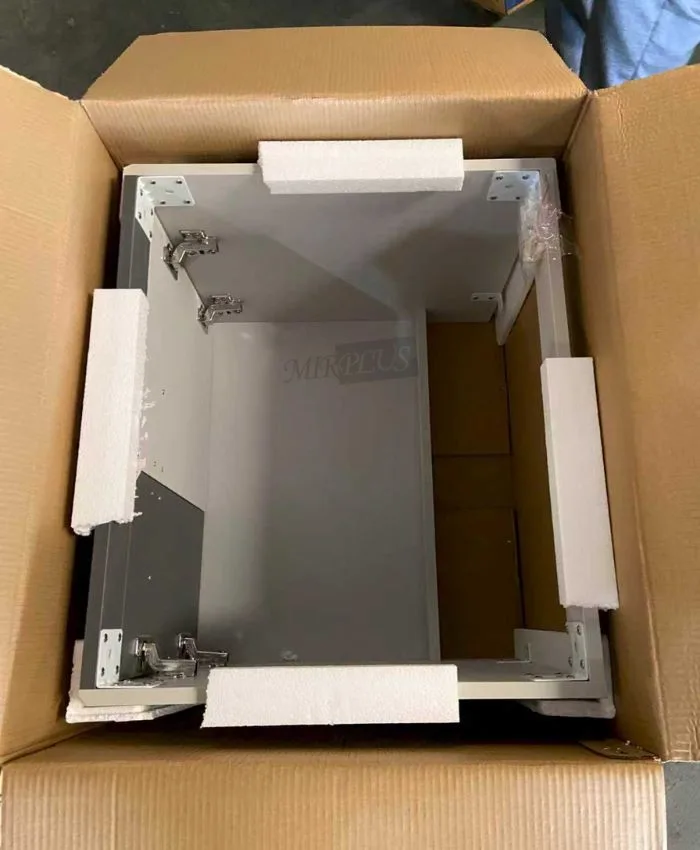

Ultimately, a successful commercial project requires a reliable manufacturing partner who understands the nuances of both materials. Whether your upcoming development requires 500 standardized ceramic basins for a rapid apartment rollout, or 50 custom-sized sintered stone vanities for a luxury resort, finding a factory that can handle the entire package saves you time and money.
At Mirplus, we specialize in comprehensive, factory-direct bathroom solutions for global commercial projects. From moisture-resistant [Bathroom Cabinets] tailored with either ceramic or sintered stone tops, to our cutting-edge, CE-certified [LED Bathroom Mirrors], we provide full OEM/ODM customization to meet your exact architectural specifications.
Ready to streamline your supply chain and protect your project budget? Contact the Mirplus factory team today for a custom wholesale quote.
Which material is more expensive, ceramic or sintered stone?
Generally, sintered stone is the more expensive option. It requires a highly advanced manufacturing process (extreme heat and pressure) and is often custom-cut for specific projects. Ceramic is highly cost-effective because it is mass-produced using standardized molds, making it an excellent choice for budget-conscious renovations.
Do sintered stone washbasins stain easily?
No, sintered stone is virtually stain-proof. It has a water absorption rate of less than 0.05%, meaning it is completely non-porous. Liquids like makeup, hair dye, or coffee cannot penetrate the surface, allowing them to be wiped away easily without leaving a permanent mark.
Can a chipped ceramic or sintered stone sink be repaired?
If a ceramic sink suffers a minor chip, you can often patch it using a porcelain epoxy repair kit, though the repair may still be slightly visible. Sintered stone is significantly harder and much more difficult to chip in the first place. However, if a major impact does manage to crack a sintered stone slab, repairing it flawlessly is very challenging and typically requires a professional stone fabricator.
Will sintered stone or ceramic turn yellow over time?
Neither material will yellow. Unlike cultured marble or acrylic sinks that contain artificial resins (which can yellow when exposed to UV light or age), both ceramic and sintered stone are made from natural minerals baked at extreme temperatures. They are 100% UV resistant and will maintain their original color indefinitely. (Note: While the ceramic won't yellow, the silicone caulk used to seal a traditional under-mount sink often will).
Which material is better for a busy family bathroom?
Both are fantastic choices, but it depends on your priorities. If you want a cost-effective, classic white sink that is easy to replace and clean, ceramic is perfect. If you want a highly durable, modern, seamless sink that requires zero maintenance and won't scratch when kids drop heavy items, sintered stone is the superior long-term investment.

Copyright 2022 - All Mirplusbath