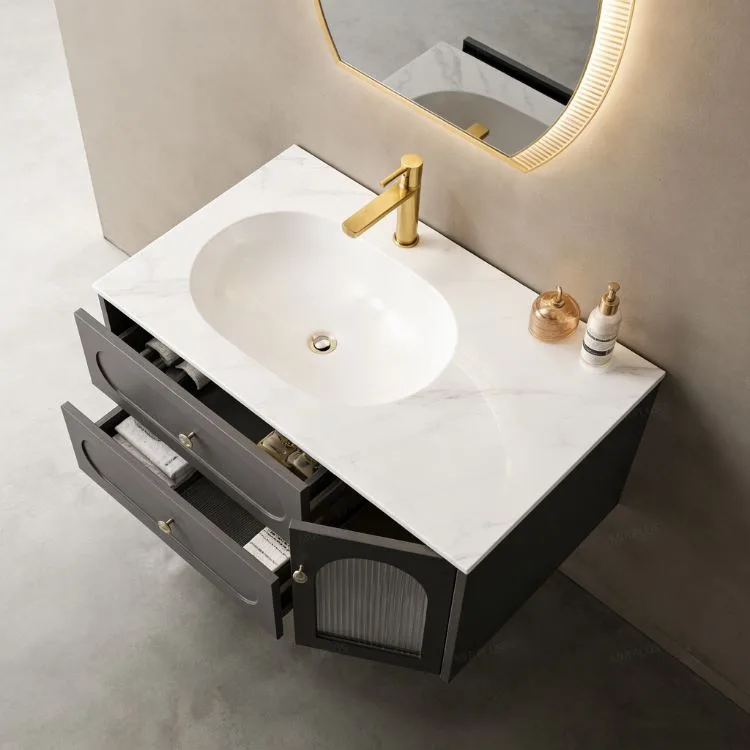
If you have looked at bathroom design trends over the last decade, you have probably noticed a lot of all-white, almost clinical spaces. While clean, that look can sometimes feel a bit cold. Lately, there has been a massive shift back to natural textures and warmer tones, and the vanity is taking center stage.
For property owners, designers, and contractors, bringing in a dark wood bathroom vanity is a highly effective way to inject warmth and character into a space.
But getting this look right takes more than just picking out a dark stain. It is about understanding how the materials hold up to moisture, how to balance the heavy tones, and how to keep the room feeling open.
Here is a practical, no-nonsense guide to choosing and styling a dark wood bathroom vanity that actually works in the real world.
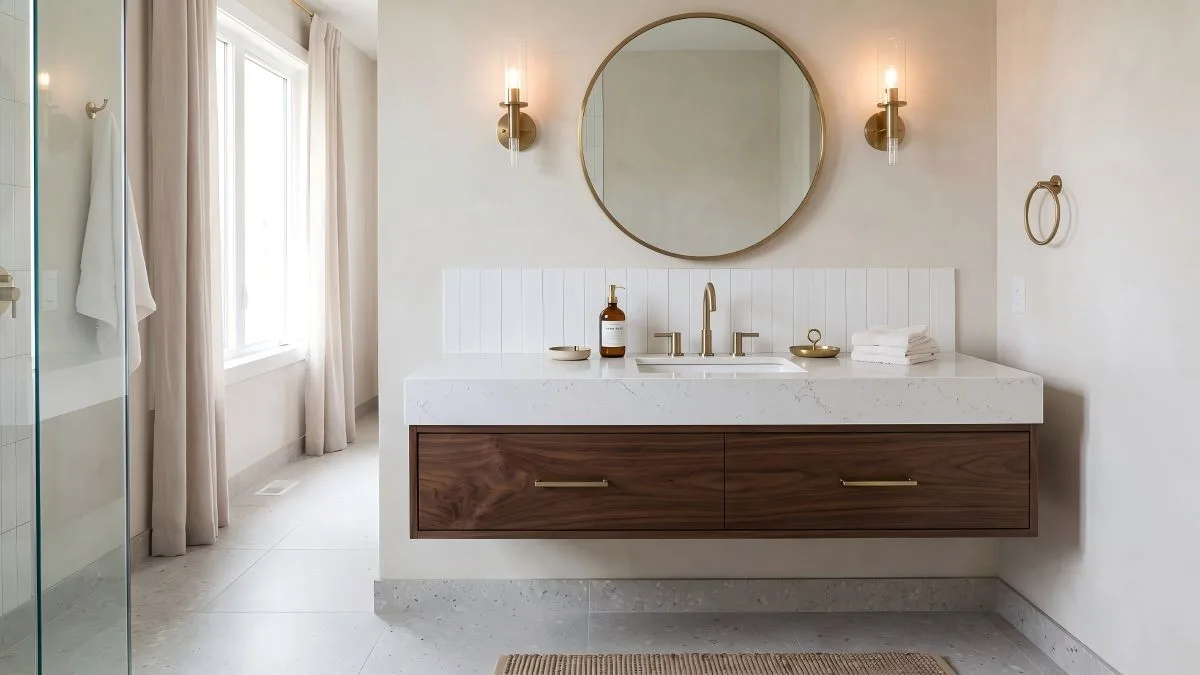
The return of dark wood is not just a passing fad; people are fundamentally changing what they want out of a bathroom. They want a space that feels like a grounding, high-end spa, not a sterile utility room.
Dark wood species, like walnut or espresso-stained oak, naturally bring that organic warmth indoors. The rich grain patterns introduce a tactile depth that you simply cannot get from flat, painted cabinets.
Plus, dark wood is incredibly versatile. Pair a walnut cabinet with matte black hardware, and you have a sharp Mid-Century Modern look.
Swap that out for shaker doors and brass pulls, and you are instantly in classic, boutique-hotel territory. It gives you room to play with the design.
Related article: Command Your Design: The Ultimate Guide to Bathroom Vanity Wood Types
When people shop for a premium dark wood bathroom vanity, their first instinct is usually to ask for "100% solid wood." It sounds like the best option on paper. But in reality, putting a solid block of wood in a high-moisture bathroom can be a risky move.
Bathrooms deal with extreme humidity fluctuations. Every time someone takes a hot shower, the room fills with steam.
Solid wood is porous, so it absorbs that moisture, expanding when it is wet and shrinking as it dries. Over time, this constant breathing cycle leads to warped doors, bowed shelves, and cracked joints.
If you want a vanity that is going to last, the smarter structural choice is a high-quality plywood core finished with a real wood veneer.
Here is why: plywood is engineered by pressing thin layers of wood together in alternating directions (cross-grain). This structure essentially locks the wood in place, preventing it from expanding or contracting.
By applying a premium, authentic wood veneer directly over this stable core, you get the exact same deep grain and visual warmth of a solid wood piece. You get the luxury look you want, backed by the structural reliability you actually need.
A dark vanity carries a lot of visual weight in a room. If you are not careful, it can easily dominate the space. The secret to making it look intentional and balanced is high contrast.
Do not place a dark granite top on a dark wood cabinet. It turns the vanity into a heavy, undefined block. Instead, give the wood some contrast to make it stand out.
The hardware acts like jewelry for your vanity—it sets the final tone.
The number one concern people have with dark furniture is that it will make a small bathroom feel like a cramped cave. You can easily bypass this by being strategic with the rest of the room.
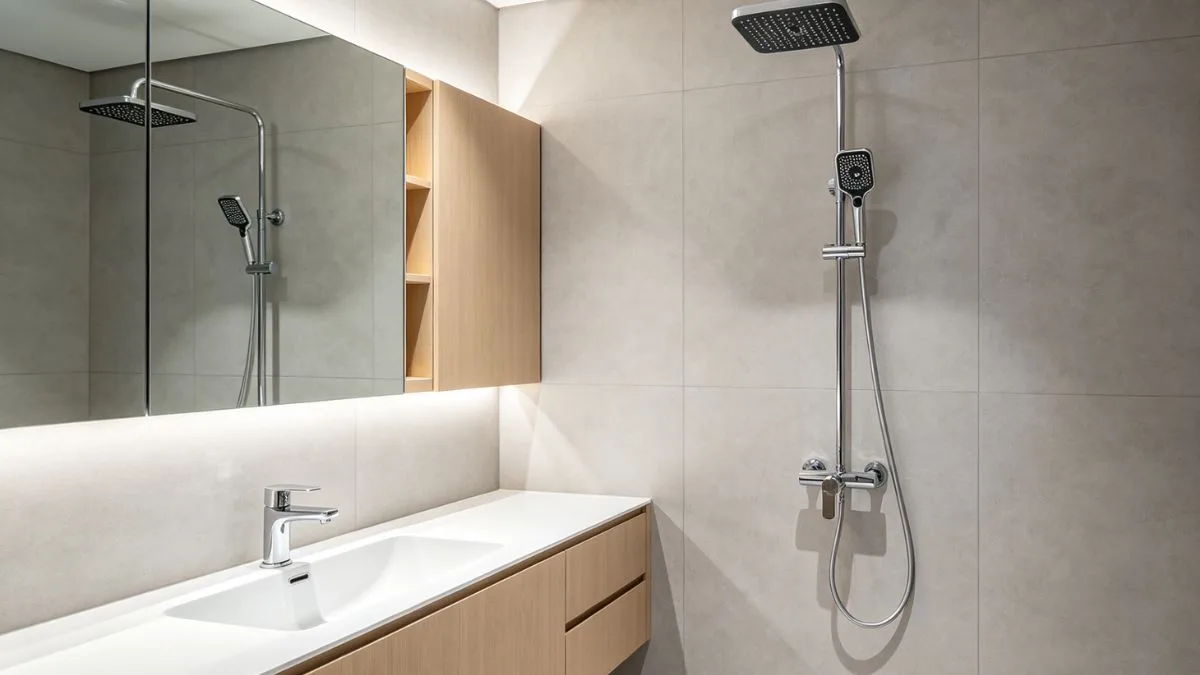
Never put a dark wood bathroom vanity against a dark wall. Let the vanity be the star of the show by keeping your backdrop light.
Use soft whites, warm greys, or pale creams for the walls and floor tiles. This keeps the overall atmosphere airy while letting the cabinet stand out as an architectural feature.
Relying on a single overhead light will cast harsh shadows straight down onto a dark vanity. To open up the space, you need layered lighting.
Try adding wall sconces at eye level on either side of the mirror, or use a backlit LED mirror. Washing the wall in soft, even light pushes the visual boundaries of the room outward.
Related article: 14 Best Bathroom Cabinet Trends for 2026: What's In & Out
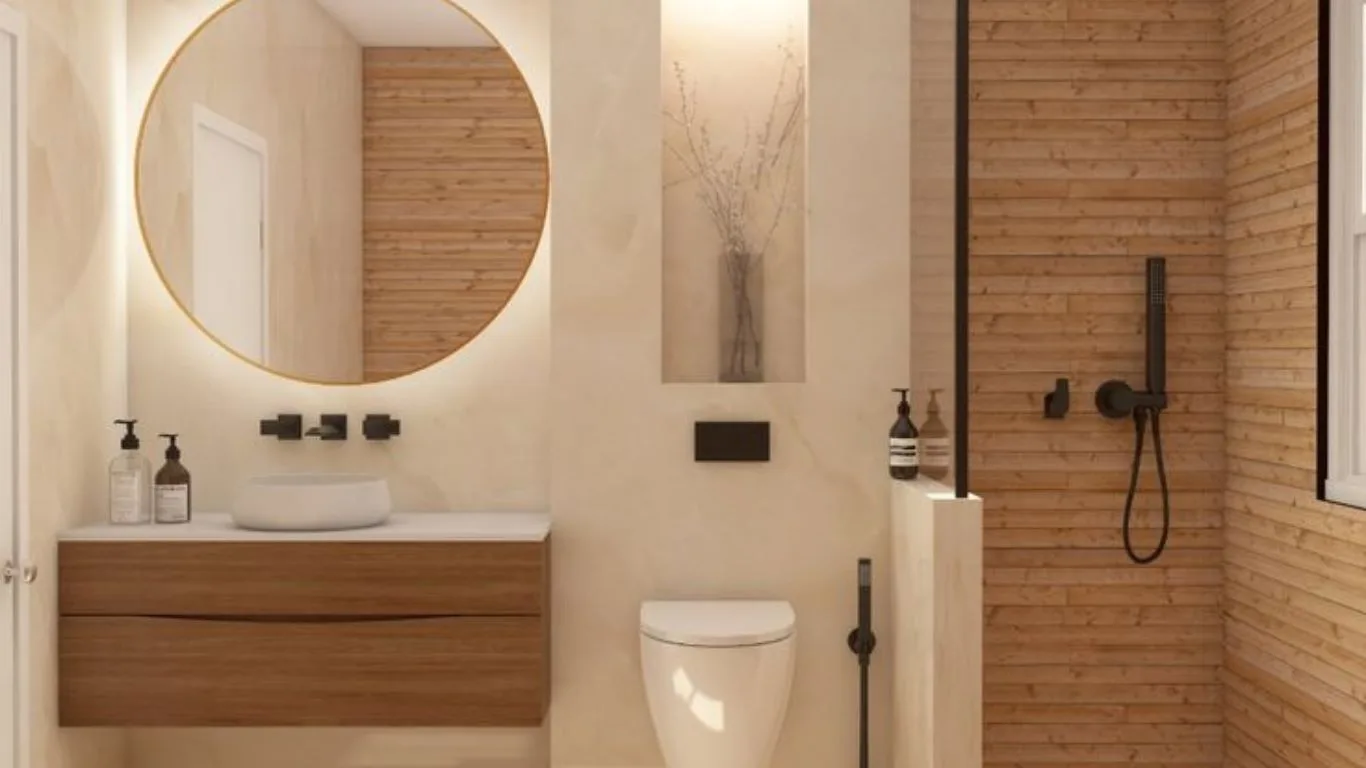
If your square footage is seriously tight, look into a wall-mounted (floating) dark wood vanity. Lifting the cabinet off the ground exposes more continuous floor tile underneath.
Because our eyes intuitively judge the size of a room by how much floor space we can see, this simple trick prevents the dark cabinet from feeling heavy and keeps the room feeling expansive.
Dark wood finishes are surprisingly good at hiding minor water spots and dust—much better than glossy white or stark black paint. But they still need proper care to protect that clear topcoat.
Keep it simple: wipe the cabinet down with a soft, damp microfiber cloth and a mild soap. Skip the abrasive sponges and harsh chemical cleaners, as they will eventually eat through the protective seal.
Most importantly, run your exhaust fan and do not let standing water sit on the wood seams around the sink. Keep it dry, and the finish will take care of itself.
Choosing a dark wood bathroom vanity is a great way to bridge the gap between high-end aesthetics and everyday practicality.
By focusing on smart construction—like a stable plywood core with an authentic wood veneer—and balancing the dark tones with bright countertops and good lighting, you can build a bathroom that looks luxurious and holds up beautifully for years to come.
Does a dark wood bathroom vanity make a bathroom look smaller?
It only makes the room feel smaller if the walls and floors are also dark. If you pair your dark vanity with light walls, a bright countertop, and solid layered lighting, it acts as a grounding focal point without shrinking the space at all.
Why is plywood preferred over solid wood for bathroom vanities?
Bathrooms are high-humidity environments. Solid wood naturally expands and contracts with moisture, which leads to warping and cracking over time. Plywood has a cross-grain engineered structure that holds its shape, making it a much more durable, warp-resistant core material for damp spaces.
What are the best hardware colors for dark wood cabinets?
Brushed brass or satin gold are the most popular choices right now because they add a warm, luxurious contrast against the dark wood. Polished chrome gives a crisp, classic look, while matte black is great for a subtle, modern feel.

Copyright 2026 - All Mirplusbath